Instruments & gear
For many musicians and producers, the journey toward professional sound is paved with expensive misunderstandings. It is a common scenario: you invest heavily in a high-end interface or a vintage guitar, yet the result still lacks the depth and clarity of a commercial release. This disconnect often stems not from a lack of quality equipment, but from how that equipment is selected, maintained, and utilised within a specific environment.
Whether you are setting up a home studio in a spare bedroom or looking to expand a professional facility, understanding the interaction between gear and technique is paramount. This guide explores the fundamental principles of instruments and recording gear, moving beyond marketing hype to focus on what actually impacts your sonic signature. From British craft traditions to modern digital workflows, we examine how to make smarter investments that genuinely improve your music.
The Foundation of Recording: Acoustics, Microphones, and Interfaces
One of the most persistent myths in audio production is that a more expensive microphone automatically yields a better recording. In reality, the acoustic environment plays a far more critical role. A top-tier condenser microphone is sensitive enough to capture every nuance of a performance, but it will also capture every flaw in an untreated room. Often, moving a microphone just 10cm can transform a sound more effectively than upgrading the hardware itself.
Mastering the Signal Chain
The signal chain—from the source to the digital audio workstation (DAW)—is only as strong as its weakest link. Many producers face the frustration of « thin » recordings despite using premium preamps. This is frequently due to gain staging issues or a mismatch between the equipment and the source material. Understanding the difference between dynamic and condenser microphones is essential; while a condenser might offer detail, a dynamic mic often provides the rejection needed in less-than-ideal acoustic spaces.
- Audio Interfaces: A £2,000 interface offers better converters, but a £200 unit is rarely the reason a demo sounds amateur. Focus on driver stability and latency performance (buffer settings) first.
- Preamps: Vintage Neve-style preamps add colour, but they cannot fix a poor performance or bad mic placement.
- Room Treatment: Addressing standing waves and flutter echoes is often the single upgrade that transforms sound the most per pound spent.
Electronic Sound Design: Synths, Samplers, and Controllers
The debate between hardware and software continues to dominate the electronic music landscape. While analogue gear is prized for its « warmth » and tactile workflow, modern plugins have reached a level of fidelity where the distinction is often negligible in a full mix. The challenge lies not in the source of the sound, but in how it is processed and performed.
Humanising the Machine
A common pitfall in electronic production is the « mechanical » feel of programmed beats. Professional tracks retain a sense of groove because they often avoid rigid quantisation. Whether you are using a classic TR-808 emulation or a modern drum machine, micro-timing and velocity variation are key to making hi-hats and snares sound like a performance rather than a calculation. Furthermore, choosing the right MIDI controller—be it weighted keys for piano players or pads for finger drummers—can bridge the disconnect between technical capability and musical expression.
Navigating the Modular World
Modular synthesis offers unparalleled creative freedom, but it presents a significant financial risk. The « Eurorackvs.Buchla » philosophy is less about format and more about how you approach sound generation. Beginners often fall into the trap of buying « cool » modules that do not communicate well with one another. Building a system requires a clear strategy: starting with a core voice and modulation source prevents the setup from becoming a confused wall of noise.
Acoustic Instrument Care and Performance
For acoustic musicians, the instrument’s physical condition is the primary EQ. No amount of mixing can correct a poorly set-up guitar or an untuned drum kit. In the UK, where humidity and temperature fluctuate significantly due to central heating and weather, maintenance becomes a critical daily discipline.
Guitars: Setup Over Splashing Out
Before purchasing a new instrument, consider the state of your current one. A professional setup can make a budget guitar play like a boutique instrument. Factors such as action height, intonation, and pickup height have a drastic impact on tone. For example, simply changing pickups or adjusting their height can transform the output more radically than buying a new body. Whether you play a solid body or a semi-hollow, the connection with the instrument is improved significantly through proper maintenance.
Drums and Piano: The Environment Factor
Acoustic instruments react physically to their surroundings. A grand piano can sound brilliant in a showroom but dull in a carpeted living room. Central heating is particularly destructive to pianos, causing soundboards to crack and tuning to drift. Similarly, a drum kit’s sound is defined by the shell material (maple, birch, mahogany) and head choice. Changing drumheads and tuning for the specific room—whether a dry jazz club or a cavernous hall—is a skill that defines professional drummers.
Smart Investing in the UK Gear Market
The allure of vintage gear is powerful, but it comes with caveats. While a 40-year-old compressor or a 200-year-old violin holds history, it also requires specialist upkeep. The UK market offers unique opportunities for buying used gear, but knowing when to buy is crucial to securing value.
Vintage vs. Modern Reliability
Analogue gear often costs significantly more than digital equivalents, primarily due to manufacturing costs and scarcity. However, does it always sound better? Not necessarily. Tape machines add saturation that plugins approximate well, but the maintenance of physical tape heads is a costly reality. When deciding between a New Focusrite or a Vintage Neve, consider the « costofownership » including repairs. For many, a hybrid workflow—using analogue front-ends with digital processing—produces the best results per hour invested.
Ultimately, the best gear is the equipment that does not get in the way of your creativity. Whether you are supporting British craft traditions by buying a handmade instrument or optimising a budget digital setup, the goal remains the same: to capture the performance with honesty and emotion.
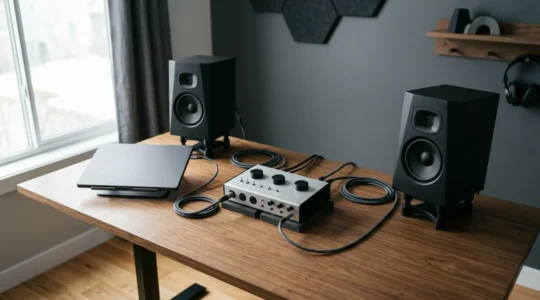
Why Does Your Recording Sound Different When You Change Audio Interfaces?
Contrary to popular belief, a more expensive audio interface is not a magic bullet for better sound. The perceived quality of an interface depends on its synergy with your entire recording chain, including your room, microphones, and computer. A high-end…
Lire la suite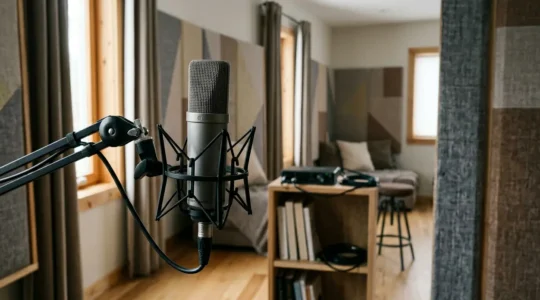
Why Does Your £500 Microphone Sound Amateur While Bedroom Producers Get Radio-Ready Results With £100 Mics?
The quality of your recordings has less to do with your microphone’s price tag and more to do with your control over the physics of sound capture. The acoustics of your room and the microphone’s position have a greater impact…
Lire la suite
Why Your Trumpet Playing Hurts After 30 Minutes (And How Professionals Play for Hours)
If your trumpet playing is cut short by pain and fatigue, the problem isn’t a lack of strength; it’s a crisis of efficiency. The pain is a direct signal of wasted energy, excessive muscle tension, and poor resonance. This guide…
Lire la suite
Why Does Your Saxophone Sound Stuffy While Your Teacher’s Sings?
The frustrating gap between your saxophone sound and your teacher’s has little to do with the price of your instrument and everything to do with mastering a precise, internal ‘tonal system’. Your mouthpiece’s geometric design (its acoustic interface) shapes your…
Lire la suite
Why Does Your Grand Piano Sound Different Every Time the Weather Changes?
That frustrating shift in your piano’s sound isn’t a defect; it’s a direct response to your home’s changing humidity. As a living instrument made of wood, it’s in a constant battle with moisture. This guide moves beyond simple tuning advice…
Lire la suite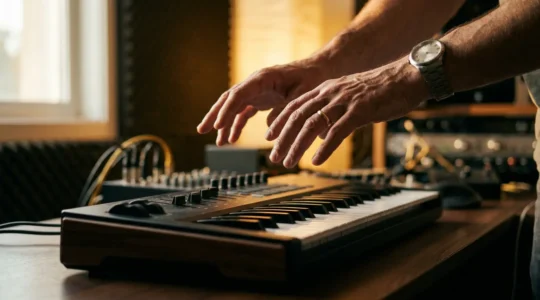
Why Does Your MIDI Controller Feel Disconnected From the Music You’re Making?
The mechanical feeling from your MIDI controller is a cognitive workflow failure, not a hardware limitation. Your brain is overloaded trying to remember functions, which kills musical expression and timing. True musical connection comes from mapping for creative tasks, not…
Lire la suite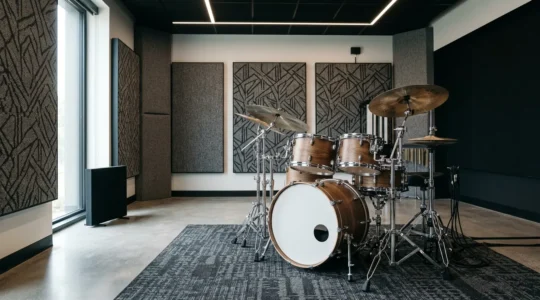
Why Does Your Expensive Drum Kit Sound Different in Every Room You Play?
The frustrating inconsistency of your expensive drum kit has little to do with its quality and everything to do with the unresolved battle between its components and the room’s physics. Your drumheads and tuning are the primary voice of your…
Lire la suite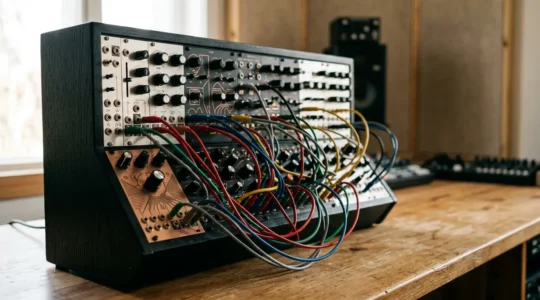
Why Does Modular Gear Cost a Fortune but Produce Sounds You Could Make With Plugins?
The exorbitant price of modular synthesis isn’t justified by its sonic output alone, but by its function as a tool for creative rewiring and intentional practice. Unlike software, the physical, tactile process of patching fosters a deeper, more deliberate engagement…
Lire la suite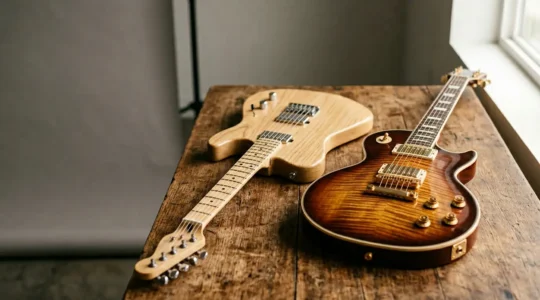
Why Does Your £2,000 Guitar Sound Worse Than Your Mate’s £400 One?
The shocking truth is that a guitar’s price tag has very little to do with its final sound quality; a well-optimised ‘Tone Chain’ is what truly matters. An expensive guitar with a single « sonic bottleneck »—like poor setup or cheap electronics—will…
Lire la suite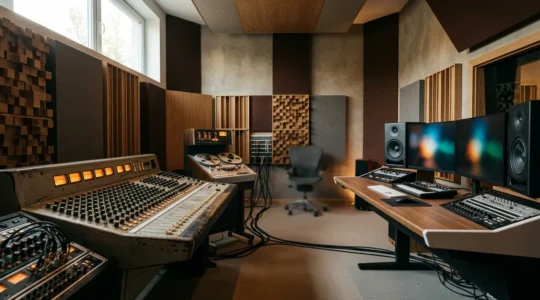
Why Does Analog Gear Cost 10 Times More but Sometimes Sound Worse Than Digital?
The true cost of analog gear isn’t the price tag; it’s the hidden system of maintenance, required knowledge, and the powerful psychological biases it exploits. Expensive individual components do not guarantee better sound; system synergy and room acoustics are far…
Lire la suite