Culture & music history
Music is far more than a sequence of notes on a page or a fleeting soundwave; it is a dynamic historical document that reflects the culture, technology, and philosophy of its time. Whether you are a musician trying to interpret a Baroque concerto, a composer worrying about digital longevity, or a listener curious about why certain artists become legends, understanding the context behind the music is essential. This exploration of culture and music history aims to bridge the gap between the academic past and the practical present.
In this guide, we will navigate through the complexities of historical performance, the fluid nature of folk traditions, and the critical modern challenge of archiving. By deconstructing how music was played, how it is remembered, and how it should be preserved, we gain the tools to appreciate the art form in its entirety. Let us move beyond the surface level of melody and rhythm to uncover the deeper narratives that shape our musical reality.
The Quest for Authenticity in Performance Practice
One of the most fascinating debates in music history revolves around the concept of authenticity. When we pick up a score written three hundred years ago, are we hearing what the composer intended, or are we filtering it through modern sensibilities? This struggle is central to the Historically Informed Performance (HIP) movement.
Why Early Music Often Sounds ‘Wrong’ to Modern Ears
If you have ever felt that a medieval or early Baroque performance sounded slightly out of tune or mechanically stiff, you are not alone. However, this is often a misunderstanding of historical tuning systems and rhythmic flexibility. Modern orchestras typically use equal temperament, a tuning system that allows instruments to play in any key but sacrifices the pure resonance of specific intervals.
Conversely, period instruments and historical tunings prioritize the ‘colour’ of the key, making some chords sound incredibly pure and others intentionally jarring. Furthermore, notation in early music was not always prescriptive. A medieval manuscript might look rhythmic on paper, but performing it with the mathematical precision of a computer creates a mechanical, soulless result. Understanding the unwritten rules—the implied flexibility—is the habit that distinguishes a novice from a master of early music.
The Orchestral Evolution: Baroque to Romantic
Why does a Bach concerto sound stiff when played by a massive modern symphony orchestra? The answer lies in physics and scale. Modern instruments are designed for projection in large halls, utilizing higher tension and different materials. Baroque instruments, with their gut strings and lighter bows, offer a texture and articulation that naturally ‘breathes.’ When we apply the heavy, sustained sound of the 19th-century Romantic tradition to 17th-century music, we often lose the conversational rhetoric that defines the Baroque aesthetic.
The Mystery of the Musical Canon: Fame, Failure, and Legacy
Why do we remember some composers while others vanish? The history of music culture is littered with forgotten geniuses and ‘overnight’ successes that took centuries to materialize. The formation of the ‘canon’—the list of works we consider masterpieces—is rarely a meritocracy based solely on quality.
- The Rediscovery Phenomenon: Antonio Vivaldi, now a household name, was virtually forgotten for nearly two centuries after his death. His resurgence highlights how taste is cyclical and dependent on champions who rediscover manuscripts in dusty archives.
- The Fallacy of First Reviews: History teaches us to be skeptical of initial critical reception. Many works now considered timeless classics were absolute critical failures at their premieres. This disconnect often happens because innovative music challenges the existing vocabulary of critics.
- Managing Legacy: For modern artists, specifically ‘legacy artists’ from the rock and pop eras (like the shifts seen in David Bowie’s career between 1969 and 1972), the challenge is maintaining relevance. Releasing box sets or archival material is a delicate balance; done correctly, it cements a legacy; done poorly, it looks like a desperate cash grab.
Folk Traditions: The Fluidity of Oral History
Moving away from the written score, the world of traditional and folk music operates on entirely different principles. Here, music is not an object to be preserved in amber, but a living process. The most common mistake beginners make is searching for the « correct » version of a folk song.
The variance of Oral Traditions
In traditions such as those found across England, Scotland, Wales, and Ireland, a song changes every time it is sung. This variation is not a flaw; it is a feature. Factors influencing these changes include:
- Regional Dialects and Styles: The ornamentation used by a singer in the Scottish Highlands will differ vastly from a singer in Norfolk, even if the melody is similar.
- Memory and Adaptation: Oral transmission relies on memory, which naturally filters and adapts lyrics to fit the singer’s current reality.
- The Collector’s Bias: Early collectors often wrote down a single version of a song, inadvertently creating a fixed « standard » that never actually existed in the living tradition.
To truly understand folk music, one must accept that the process of variation is more important than the static documentation. Recording elderly tradition bearers is urgent work, not just to save the songs, but to capture the nuanced styles that cannot be notated.
The Crisis of Preservation: Archiving for the Future
In our digital age, we face a paradox: we create more data than ever, yet our music is more fragile than it was in the era of parchment. The transition from physical scores to digital files has introduced the risk of digital obsolescence.
Why Your Compositions Might Disappear
It is a terrifying reality that archives often struggle to open files from just two decades ago. Proprietary software formats evolve or go bankrupt, rendering old project files unreadable. If you use software like Sibelius or Finale, you are relying on a commercial entity for the survival of your art. To ensure your compositions survive technology changes and potential digital disasters, a robust archiving strategy is non-negotiable.
Best Practices for Musical Archiving
Whether you are preserving your own compositions or a historic collection, follow these guidelines:
- Diversify Formats: Never rely on a single proprietary file type. Export your work to MusicXML (an open standard for notation), MIDI (for raw data), and PDF (for visual reference).
- Physical Backups: Paper is surprisingly durable. A high-quality library edition or a printed pocket score can last centuries, whereas a hard drive may fail in five years.
- Contextual Documentation: A score without context is a puzzle. Archive program notes, correspondence, and recordings alongside the music to preserve the intent, not just the notes.
Conclusion
The study of culture and music history is an investigation into humanity’s changing relationship with sound. From the stiff rhythmic interpretations of medieval manuscripts to the fluid evolution of folk songs and the technical challenges of digital preservation, every aspect requires critical thinking and context. By asking why a Baroque minor key feels different from a Pop minor key, or why a symphony becomes immortal, we deepen our engagement with the art form. As listeners, performers, and archivists, our role is to ensure that the music of the past continues to resonate meaningfully in the future.

Why Are Britain’s Traditional Instrument Makers Disappearing?
The decline of Britain’s instrument makers is not just an economic issue; it’s a crisis of connection that musicians have the power to reverse. A handmade instrument’s superior sound stems from the luthier’s personal selection of tonewoods and voicing, a…
Lire la suite
Why Do Folk Songs Change Every Time Someone Sings Them?
Contrary to the belief that variations in folk songs are memory errors, they are the very mechanism that keeps the music alive, a process of creative re-creation rather than flawed repetition. Oral transmission is an act of perpetual re-composition, where…
Lire la suite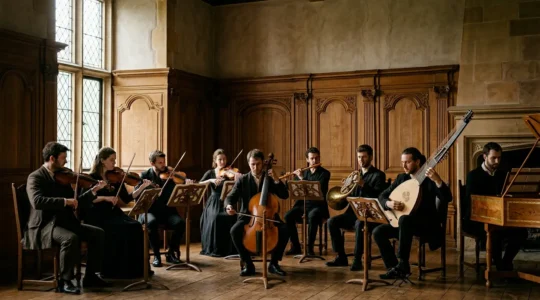
Why Does Baroque Music Sound Stiff When Modern Orchestras Play It?
The stiffness you hear isn’t in the music; it’s a result of modern performers reading a Baroque score as a fixed blueprint instead of an improvised rhetorical script. Period instruments aren’t primitive; their distinct timbres are designed for conversational clarity…
Lire la suite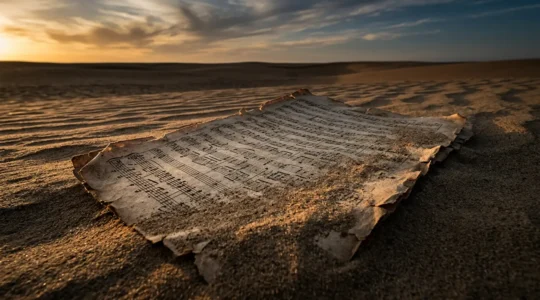
Why Do Some Symphonies Become Immortal While Equally Good Ones Are Forgotten?
Contrary to the myth of innate, timeless genius, musical immortality is not a magical quality but a status that is actively constructed. The survival of a symphony depends on a dynamic and often brutal process involving historical accident, critical revival,…
Lire la suite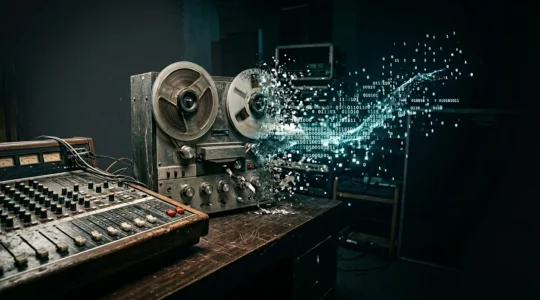
Why Your Digital Compositions Could Disappear Forever
Most composers believe saving a digital file means it’s safe forever. This is a dangerous myth. Digital information is inherently fragile, constantly threatened by software obsolescence and storage failure. True preservation isn’t a one-time save, but an active, ongoing process…
Lire la suite
Why Does Your Early Music Performance Sound Wrong Even When Playing the Right Notes?
The common belief is that authentic performance requires strictly following historical rules; the reality is that it comes from embracing the music’s original physical and conceptual constraints as a source of creative expression. Instead of metronomic precision, early music thrives…
Lire la suite