
That frustrating shift in your piano’s sound isn’t a defect; it’s a direct response to your home’s changing humidity. As a living instrument made of wood, it’s in a constant battle with moisture. This guide moves beyond simple tuning advice to diagnose the root cause: environmental instability. By understanding how to manage your home’s microclimate and adopting a proactive maintenance schedule, you can protect your piano’s structural integrity, preserve its value, and achieve consistent, beautiful sound year-round.
As a piano owner, you’ve certainly noticed it. One day your grand piano sounds rich and perfectly in tune; the next, after a bout of rain or a sudden cold snap, it sounds dull, tinny, or just… off. The common advice is to simply get it tuned more often. While regular tuning is essential, it’s like treating a symptom without diagnosing the disease. The real issue is far more fundamental and tied to the very soul of your instrument: its organic, breathing nature.
Your piano is composed of vast amounts of wood, felt, and leather—all materials that are highly sensitive to their environment. The constant shifts in a typical UK climate create an invisible war within the instrument. But if the key to a stable piano isn’t just more frequent tuning, what is it? The answer lies in shifting your perspective from a reactive owner to a proactive custodian. It requires understanding the hygroscopic battle happening inside your piano and learning to manage the environment that fuels it.
This guide will walk you through a technician’s diagnostic process. We will explore why your central heating is a greater threat than a cold garage, establish a professional servicing schedule, and demystify the process of selecting and maintaining a piano—whether it’s a new instrument for a teaching studio or a precious family heirloom. By the end, you will not only understand why your piano’s sound changes, but you will be empowered to ensure its mechanical performance and structural integrity for generations to come.
To help you navigate these critical aspects of piano care, this article is structured to build your knowledge from the foundational environmental factors to long-term preservation strategies. The following sections provide a complete roadmap for any conscientious piano owner.
Summary: A Technician’s Guide to Piano Stability
- Why Does Central Heating Destroy Pianos Faster Than Cold Storage?
- How Often Should Your Grand Piano Be Tuned and Serviced for Best Results?
- Baby Grand or Full Concert: Which Size Serves a Home Teaching Studio Best?
- The Piano Buying Mistake of Trusting Brand Names Over Individual Assessment
- When in the Year Should You Buy a Piano for Best Deals and Selection?
- How to Maintain an Heirloom Instrument So It Survives Another 100 Years?
- How to Fix the Room Problems That Make Every Microphone Sound Bad?
- Why Are Traditional Instrument Makers Disappearing Faster Than the Skills Can Be Passed On?
Why Does Central Heating Destroy Pianos Faster Than Cold Storage?
The single greatest enemy of your piano’s stability and long-term health is not cold, but dryness. Specifically, the bone-dry air produced by modern central heating systems. Pianos are built in environments with controlled humidity, ideally between 45-60%. When you turn on your heating in the autumn, the air inside your home changes dramatically. Research confirms the severity of this shift; air at 4°C and 80% relative humidity drops to a shocking 25% when heated to a comfortable 22°C indoors. This creates an arid, desert-like microclimate that is catastrophic for an acoustic piano.
The massive wooden soundboard is the heart of your piano’s tone. It is built with a slight upward curve, or « crown, » which pushes against the strings to create rich, resonant sound. When exposed to dry air, the soundboard loses its natural moisture, flattens, and shrinks. This reduces its pressure against the strings, causing the pitch to go flat and the tone to become thin and lifeless. More alarmingly, this constant shrinking can cause the wood to develop cracks, a form of structural damage that can be terminal for the instrument. The pinblock, the dense wooden plank that holds the tuning pins under immense tension, also suffers. As it dries and shrinks, it can lose its grip on the pins, leading to poor tuning stability.
In contrast, a piano stored in a cold but consistently humid space (like an unheated garage) will fare much better. While not ideal, the stability of the humidity means the wood is not undergoing constant, stressful cycles of expansion and contraction. The damage from dryness is cumulative and often irreversible.
Case Study: The Devastating Effect of Underfloor Heating
This is a real-world cautionary tale. According to an account from piano retailer Forsyth’s, a customer placed a newly purchased piano directly over underfloor heating. The constant, rising warm air acted like a kiln, aggressively drying out the soundboard from underneath. In a short time, the soundboard split so extensively that the instrument was declared a « virtual write-off, » with repairs deemed too costly to be viable. This illustrates that direct, dry heat is a piano’s worst enemy, causing rapid and irreparable harm.
How Often Should Your Grand Piano Be Tuned and Serviced for Best Results?
Tuning is the most frequent service a piano requires, but the question of « how often » depends entirely on the instrument’s age, use, and environment. A simple « once a year » rule is often insufficient. For a piano to deliver its best mechanical performance, a more tailored approach is necessary. The goal is not just to correct the pitch but to maintain its stability throughout the year, especially after the major environmental shifts caused by seasonal heating and cooling.
A brand-new piano is a special case. The new strings will stretch considerably, and the structure will settle into its new environment. It requires more frequent attention in its first year to achieve stability. For instruments in demanding settings like schools or concert venues, the schedule must be even more rigorous. For the typical home piano in the UK, tuning twice a year is the ideal. A crucial piece of advice is timing: always schedule a tuning 3-4 weeks *after* you’ve turned your central heating on or off for the season. This allows the piano to acclimate to the new humidity level before the technician sets the tuning.
However, tuning is only one part of a complete service. As the National Piano Manufacturers Association advises, comprehensive care involves more.
Complete piano service should include periodic regulation and voicing in addition to tuning. Your technician can consult with you to recommend a maintenance schedule customized for your instrument.
– National Piano Manufacturers Association, Piano Service Recommendations
Regulation is the adjustment of the piano’s complex action mechanism to ensure a responsive and even touch. Voicing involves adjusting the hammer felts to shape the piano’s tonal character—making it brighter or more mellow. These services are needed less frequently than tuning, but they are essential for maintaining the instrument’s feel and sound over its lifetime.
- New Pianos: Up to 4 tunings in the first year to compensate for string stretching and settling.
- Schools and Institutions: Every 6 months due to frequent use and varying environmental conditions.
- Concert and Studio Instruments: Before every performance or recording session for optimal pitch accuracy.
- Home Pianos (Stable Environment): Minimum once per year, but ideally twice.
- Optimal Timing: Schedule tuning 3-4 weeks after the heating or AC system is activated to allow for climate stabilization.
Baby Grand or Full Concert: Which Size Serves a Home Teaching Studio Best?
When setting up a home teaching studio, one of the most common dilemmas is choosing the right piano. While the dream might be a full-sized concert grand, the reality of room acoustics and practicality often points to a different solution. For most home-based teaching environments, a high-quality baby grand (typically 5′ to 5’8″ in length) is not a compromise but the superior choice. The primary reason is the relationship between the instrument’s sound energy and the volume of the room.
A large grand piano is designed to fill a concert hall with sound. Placing it in a small-to-medium-sized domestic room creates an overwhelming acoustic experience. The powerful resonance has nowhere to go, resulting in a « muddy, » overpowering sound that lacks clarity. This makes it difficult for both teacher and student to discern subtle nuances in touch and dynamics. A baby grand, on the other hand, is scaled to produce a volume of sound that is appropriate for a smaller space, allowing for a balanced and clear tone.
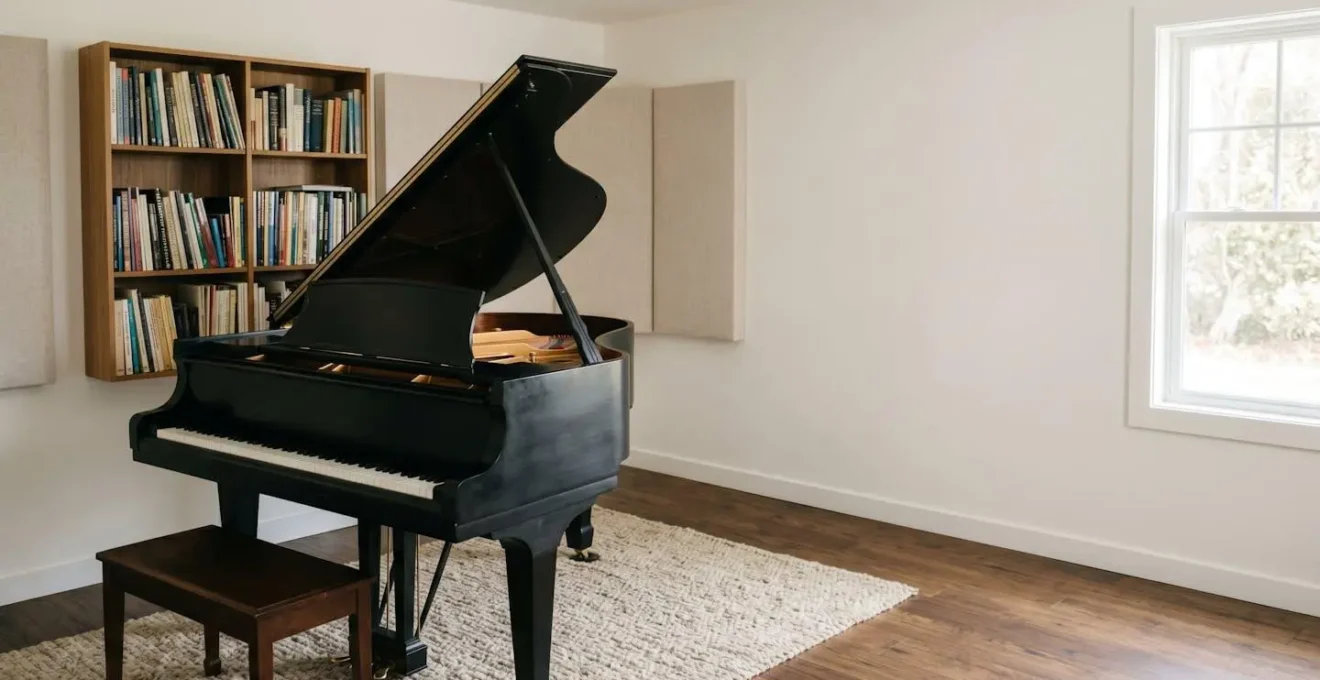
As the image illustrates, a baby grand fits proportionally within a typical room, leaving acoustic « breathing space » around it. Beyond volume, there is the matter of touch. Many teachers find that a well-made baby grand offers the perfect middle ground for developing fingers.
Music teachers often prefer baby grands for their smaller studios, as they provide students with authentic grand piano touch and response in a space-appropriate size. The lighter, more responsive action of quality baby grands proves suitable for teaching nuanced technique to developing students.
– Cunningham Piano, Teaching Studio Piano Selection Experience
Ultimately, the goal of a teaching piano is to provide an authentic grand piano experience—from the touch of the action to the sustain of the pedal—in a package that works with, not against, its environment. For the home studio, the baby grand consistently proves to be the most practical and musically effective tool for education.
The Piano Buying Mistake of Trusting Brand Names Over Individual Assessment
When searching for a used piano, it’s easy to be swayed by a famous brand name on the fallboard. While brands like Steinway, Bösendorfer, or Yamaha have earned their reputations, a brand name is a guarantee of past quality, not present condition. An ill-maintained piano from a top-tier maker can be a far worse investment than a well-cared-for instrument from a lesser-known brand. The most critical mistake a buyer can make is trusting the name over a thorough, independent technical assessment.
Every used piano has a unique history written in its wood, felt, and metal. It has been shaped by the environments it has lived in, the technicians who have worked on it, and the intensity of its use. As piano preservation expert Chris Venables notes, this is especially true for older instruments built for a different era.
Old pianos are known to suffer these issues. Largely because they were built with damp homes in mind – not modern central heating. The animal-based glues would fail. The wood had a higher moisture content.
– Chris Venables, Piano Preservation Expert Guide
This history is not visible to the untrained eye. Issues like a failing pinblock (which compromises tuning stability), hairline cracks in the bridge, or a flattened soundboard crown are red flags that only a qualified technician can identify. Trusting a seller’s claims or the piano’s cosmetic appearance is a significant gamble. An independent technician works for you, providing an unbiased diagnosis of the piano’s current health and potential future costs.
Action Plan for Assessing a Used Piano
- Soundboard Crown: Ask the technician to measure the soundboard’s crown. Is there a proper upward curve, which is essential for good tone, or has it flattened?
- Pinblock Condition: Inquire if the pinblock shows signs of being « doped » or treated. This is often a temporary fix for loose tuning pins and indicates future stability problems.
- Bridge and Bridge Pins: Have the technician check if bridge pins are secure and properly seated, and inspect the bridge for any splits or separation from the soundboard.
- Hammer Condition: Assess the hammer felts. Are they « petrified » (hardened), deeply grooved from hitting the strings, or have they been properly voiced and shaped?
- Key Bushings: Test for excessive lateral key movement. Sideways play of more than 0.5mm can indicate swollen or worn bushings, often a sign of past humidity damage.
When in the Year Should You Buy a Piano for Best Deals and Selection?
Timing your piano purchase strategically can result in significant savings and a better selection. The piano market, like any retail sector, has seasonal peaks and troughs driven by academic calendars, holidays, and even the practicalities of moving house. Understanding these cycles allows you to align your search with the best opportunities, whether you are seeking a bargain from a private seller or a new instrument from a dealer.
The period from late spring to early summer is particularly noteworthy for two reasons. Firstly, it’s peak moving season. Private sellers who are relocating are often highly motivated to sell their large, heavy instruments rather than pay to move them. This can create excellent negotiating leverage, but it’s also the period requiring the most diligence—always budget for an independent technician’s inspection. Secondly, this is when universities and music schools often offload their inventory of practice room pianos. These instruments are typically high-quality, durable models that have been professionally maintained, and they are often sold at deep discounts.
Conversely, the end of summer and the holiday season present different kinds of opportunities. Dealers look to clear out floor models in August and September to make way for new shipments, offering good deals on lightly used instruments with full warranties. The November-December holiday period is less about price cuts and more about promotional packages, such as free delivery or financing deals. The following table breaks down these strategic windows.
| Time Period | Market Segment | Opportunity Type | Key Advantages | Due Diligence Level |
|---|---|---|---|---|
| May – July | University/School Sales | Institutional Offload | High-quality practice room pianos at deep discounts; well-maintained by institutional technicians | Medium – request maintenance logs |
| August – September | Dealer Inventory Clearance | Pre-Holiday Clearance | Dealers clear older models before new shipments; best selection of floor models with negotiation leverage | Low – factory warranty included |
| April – June | Private Market | Peak Moving Season | Motivated sellers relocating; potential for best prices but highest variation in condition | High – independent technician inspection mandatory |
| November – December | Holiday Retail | Promotional Period | Financing deals and package offers; limited price flexibility but convenient delivery scheduling | Medium – standard warranty applies |
How to Maintain an Heirloom Instrument So It Survives Another 100 Years?
Maintaining an heirloom piano is about more than just keeping it in tune; it’s an act of curatorship. These instruments carry not only musical potential but also family history. To ensure a vintage piano survives and thrives for another century, you must adopt the mindset of a conservator, focusing on two key areas: creating a stable environment and meticulously documenting the instrument’s life. The goal is proactive preservation, not just reactive repair.
As we’ve established, environmental stability is paramount. For an older instrument with delicate, animal-based glues and aged wood, this is even more critical. Installing a piano-specific humidity control system (like a Dampp-Chaser) is one of the most effective investments you can make. This device creates a stable microclimate inside the piano, buffering it from the wild swings in ambient room humidity. It gently warms the air when it’s too damp and adds moisture when it’s too dry, dramatically reducing the stress on the soundboard and pinblock.
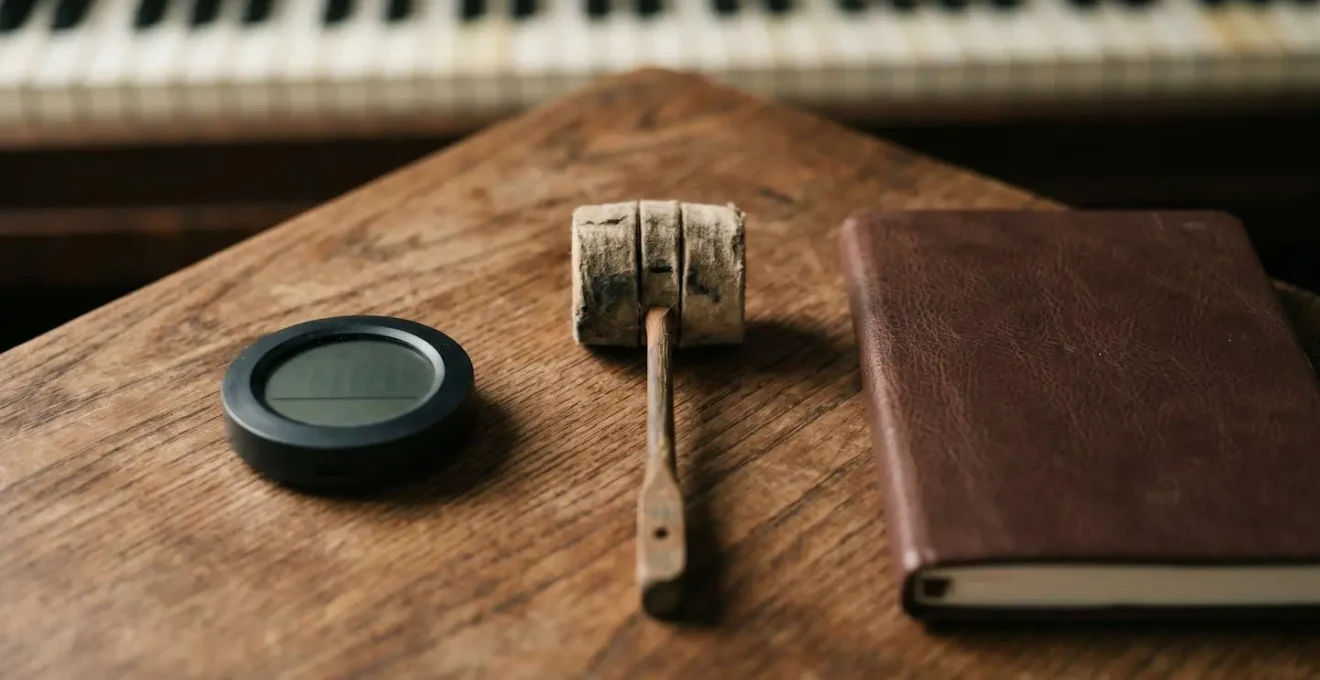
The second pillar of preservation is documentation. Every tuning, repair, and regulation adjustment is a chapter in the piano’s story. Keeping a detailed logbook is an invaluable tool for you, your technician, and any future owner. This record allows a technician to understand the piano’s history of stability, identify recurring issues, and make more informed decisions about its care. It transforms the piano from an object with an unknown past into a documented artifact.
- Record Every Service: Log the date, technician’s name, pitch adjustments, and any repairs or part replacements.
- Track Environmental Data: Note major environmental shifts (e.g., moving house, seasonal HVAC changes) and how the piano responded.
- Document Regulation: Keep track of adjustments made to the action, noting which keys or components required work.
- Photograph Major Work: Take before-and-after photos of significant repairs for a visual record.
- Maintain Technician Records: Keep a file of all technician reports and their specific recommendations for your instrument.
How to Fix the Room Problems That Make Every Microphone Sound Bad?
You can have the world’s finest grand piano, perfectly tuned and regulated, but if it’s in a room with poor acoustics, it will never sound its best. The room itself is an extension of the instrument, shaping and coloring its tone. Problems like harsh reflections, standing waves, and flutter echo can make even a superb piano sound thin, harsh, or muddy, a problem that becomes glaringly obvious when you try to record it. As experts at Stamp Sound point out, the room’s acoustics are a critical factor.
It’s important also to consider that a space’s acoustics will impact how loud a grand piano sounds and its tonality. If you use a concert grand piano in a small space, the resonance may be too overpowering, which could cause the sound to become muddy.
– Stamp Sound, Baby Grand vs Grand Piano Acoustic Analysis
One of the most common and distracting acoustic problems in domestic rooms is flutter echo. This is a fast, metallic ringing sound created when sound waves bounce rapidly back and forth between two parallel, hard surfaces, like opposing bare walls or a hard floor and ceiling. Fortunately, you can diagnose and begin to treat this issue yourself with a simple hand-clap test.
The goal of treating a room is not to make it completely « dead » or soundproof, but to achieve a balanced acoustic with controlled reflections and a natural-sounding decay. This is done through a strategic combination of absorption (which soaks up sound energy) and diffusion (which scatters it). You don’t need expensive, purpose-built acoustic panels to make a significant difference. Everyday household items can be used effectively to tame a problematic room and let your piano’s true voice shine through.
- The Hand-Clap Test: Stand in the center of the room and give a single, sharp hand-clap. Listen for a rapid, « zinging » echo. This is flutter echo.
- Identify the Culprits: The most likely sources are parallel, reflective surfaces: two bare drywall opposing each other, or a large window facing a hard wall.
- Test a Solution: Have a friend hold a thick blanket or duvet against one of the suspected walls and repeat the clap test. If the flutter echo diminishes significantly, you’ve found a primary reflection point.
- Strategic Absorption: Place sound-absorbing materials to break up these parallel surfaces. A thick area rug under the piano, heavy curtains over windows, and upholstered furniture are all effective absorbers.
- Introduce Diffusion: Scatter sound waves with uneven surfaces. A well-filled bookcase is an excellent diffuser, as the varied shapes and sizes of the books break up sound waves. Irregularly shaped furniture or textured wall hangings also work well.
Key Takeaways
- Central heating creates extremely dry air that damages your piano’s soundboard and compromises tuning stability.
- A tailored tuning schedule (ideally twice a year for home pianos, timed after seasonal HVAC changes) is superior to a generic « once a year » rule.
- In a home studio, a baby grand is often acoustically superior to a large grand, as its volume is better matched to the room size.
- When buying a used piano, an independent technician’s assessment is non-negotiable; brand name is not a guarantee of condition.
- The disappearance of skilled technicians means that owner knowledge and proactive maintenance are more critical than ever for an instrument’s longevity.
Why Are Traditional Instrument Makers Disappearing Faster Than the Skills Can Be Passed On?
The challenges of maintaining a fine acoustic piano are being compounded by a quiet but deepening crisis: the decline of the skilled craftspeople who care for them. The world of the piano technician—a profession requiring years of apprenticeship to master a unique blend of woodworking, mechanics, and musicianship—is shrinking. This trend poses a significant long-term risk to the health of the global piano population. As older, experienced technicians retire, there are not enough new apprentices entering the field to replace them.
The data paints a clear picture of this decline. According to a CareerExplorer employment analysis, the piano tuner job market is projected to shrink by a concerning 10% between 2022 and 2032. This is driven by an aging workforce; demographic data shows that around 65% of piano technicians are over 40 years old, with a substantial portion nearing retirement age. The pipeline to replenish this expertise is insufficient, with fewer formal training programs and apprenticeships available than in past generations.
This has very real consequences for piano owners. As concert pianist and author Susan Tomes observes, the scarcity is already being felt.
Not only is the pool of piano tuners getting smaller, it is in danger of not being replenished because there aren’t enough training courses in this highly-skilled craft. Already, tuners are covering enormous distances to reach all the pianos which need tuning.
– Susan Tomes, Concert Pianist and Author
For you, the piano owner, this disappearing expertise makes your role as a knowledgeable custodian more important than ever. You can no longer be a passive client. By understanding the fundamentals of your instrument’s health—the impact of humidity, the importance of regulation, the signs of structural stress—you become an active partner with your technician. This collaborative approach ensures that the limited time you have with a skilled professional is used as effectively as possible to secure your instrument’s future.
Your relationship with your piano is a partnership. By becoming an informed and proactive owner, you not only ensure its beautiful sound today but also act as the guardian of its health and value for decades to come. The next logical step is to find a qualified technician in your area and begin a dialogue about a long-term care plan for your instrument.