Music & emotions
Music is rarely just about the accurate reproduction of notes on a page; it is fundamentally a vehicle for emotional transfer. Whether you are a performer on stage, a songwriter in a studio, or a curator building the perfect playlist, the ultimate metric of success is how deeply you connect with the recipient. Yet, many musicians and curators find themselves puzzled when technically perfect performances leave audiences cold, or when carefully crafted playlists fail to gain traction.
Understanding the intricate relationship between music and emotions requires moving beyond intuition and looking at the structural and psychological mechanics of sound. This guide explores the essential elements of creating resonance, from the vulnerability required in live performance to the harmonic theories that turn a simple melody into a tear-jerker. By mastering these dynamics, you can transform passive listeners into engaged audiences.
Bridging the Gap Between Performer and Listener
One of the most frustrating paradoxes for musicians is playing a technically flawless set only to feel a complete lack of connection with the audience. This often stems from a misunderstanding of what listeners are actually seeking. While musicians often prioritize precision and complexity—hoping to impress—audiences prioritize emotional authenticity.
The habit of « emotionalhiding » is a common defense mechanism. On stage, it is safer to focus on the mechanics of the instrument than to project vulnerability. However, this creates an invisible wall. To break through, performers must shift their focus from how they sound to how they feel and, more importantly, how they want the room to feel.
- The Technical Trap: A solo filled with fast licks might impress other musicians, but a single, well-placed « bluenote » often communicates more to the general audience because it mimics the human voice’s imperfections and yearning.
- Live vs. Recorded: Live orchestral or band music feels different because of the shared physical space and the visual cues of effort and emotion. Audiences feed off the energy they see as much as what they hear.
- Spatial Acoustics: Understanding that the same symphony sounds different from the stalls versus the gallery helps in projecting sound correctly. A performer must adjust their emotional output to fill the specific acoustic space they inhabit.
The Songwriter’s Toolkit for Emotional Impact
Great songs are not accidents; they are engineered to guide the listener’s internal state. When writing, the choice of key, tempo, and arrangement acts as the emotional architecture of the piece. A common misconception is that major keys are exclusively for happiness and minor keys for sadness. The reality is far more nuanced.
Mastering Key Signatures and Modes
Some of the most poignant music utilizes major keys to evoke nostalgia or bittersweet longing rather than simple joy. Writing a major key song that makes people cry involves using specific chord inversions and melody lines that create tension against the underlying harmony. Conversely, minor keys can be used to convey mystery, seduction, or triumph. The mistake of « unrelentingdarkness » in minor key writing often exhausts listeners; effective minor key compositions need moments of lift and light to maintain engagement.
The Art of the Ballad
Slow songs are notoriously difficult to get right. If a ballad drags, it is often because the internal rhythm—the « pulse » within the slow tempo—has been lost. The best ballads feel like they are moving forward even when the BPM (Beats Per Minute) is low. This sense of motion is achieved through dynamic arranging and vocal delivery that feels conversational rather than performative.
To avoid crossing from emotional to cheesy, songwriters should focus on specificity in lyrics. Universal emotions are best triggered by highly specific, relatable details rather than broad generalizations.
The Science of Curation and Playlist Flow
In the digital age, the role of the DJ has evolved into the algorithm-driven world of playlist curation. Why do some playlists go viral while others with similar songs get zero followers? The answer often lies in the narrative flow and the balance between familiarity and discovery.
A common curation mistake is prioritizing personal taste over the listener’s journey. A playlist titled « BestSongsEver » that consists entirely of high-energy anthems becomes exhausting to listen to after twenty minutes. Just like a good story, a playlist needs an arc—peaks of energy and valleys of respite.
Structuring for Engagement
To keep listeners engaged from the first to the last track, consider the following structural principles:
- The Hook: The first three tracks must establish the mood immediately to prevent the listener from clicking away.
- Tempo Mapping: Up-tempo tracks should be placed strategically to lift the energy just as the listener’s attention might be waning.
- Genre vs. Mood: Currently, mood-based playlists often attract more followers than strict genre lists because they serve a functional purpose in the listener’s life (e.g., focusing, relaxing, working out).
- Update Frequency: To stay relevant in algorithm recommendations, playlists must be « living » entities. Regular updates signal to the platform that the content is fresh, but changing too much too fast can alienate returning listeners.
Contextual Dynamics: Worship and Art Music
Music’s emotional function changes drastically depending on the setting. Two contexts that highlight this clearly are congregational worship and classical concert halls.
Facilitating Communal Emotion in Worship
In a worship setting, the goal is participation, not just observation. A frequent issue arises when bands introduce new music that is technically impressive but melodically complex. If the melodic range is too wide, untrained voices cannot sing along, turning the congregation into an audience and killing the communal emotional connection.
Traditional hymns often succeed where modern songs fail because they were written specifically for mass singing, with predictable intervals and sturdy rhythms. To introduce new music effectively without alienating the congregation, worship leaders must bridge the gap by blending familiar theological themes with accessible new melodies, ensuring the music deepens the seasonal meaning rather than distracting from it.
Breaking Barriers in Classical Music
For newcomers, the world of art music can feel gated by intellectualism and etiquette. The worry of clapping at the wrong time or not « understanding » the structure of a symphony prevents many from experiencing the raw power of the genre. An overly intellectual approach to listening—trying to analyze every movement—can actually prevent real enjoyment.
For those looking to enter this world, it is helpful to start with orchestral concerts that focus on programmatic music (music that tells a story) or pieces with strong emotional narratives. The goal is to move from « collecting » symphonies as a checklist to truly internalizing the emotional landscape of a few key works.

Why Do Your Slow Songs Drag Instead of Captivating?
Many songwriters believe dynamics make a ballad captivating. The truth is, the most moving slow songs master internal motion and psychoacoustic intimacy. It’s not about getting louder, but about creating a feeling of progression and closeness through subtle harmony, vocal…
Lire la suite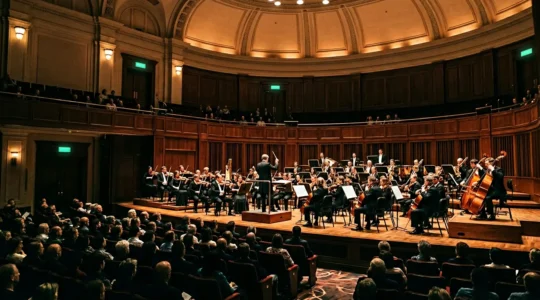
Why Does Live Orchestral Music Feel So Different From a Perfect Recording?
Contrary to popular belief, the magic of a live concert isn’t just about ‘better acoustics’—it’s a complex cognitive event where your brain actively builds the experience. The physical space of a hall creates ‘sound envelopment’, a 3D audio immersion that…
Lire la suite
Why Do Traditional Hymns Move Congregations While New Worship Songs Often Fall Flat?
The tension between old hymns and new songs isn’t about theological depth or musical style; it’s a problem of practical, physical participation. Modern worship often fails due to unsingable vocal ranges and volumes that discourage communal singing. Historic hymns succeed…
Lire la suite
Why Do Your Self-Made Playlists Get Zero Followers While Others Go Viral?
The painful truth is that your personal taste doesn’t matter; your service to the listener does. Viral playlists aren’t random collections of good songs; they are structured emotional journeys designed to minimise listener fatigue and maximise engagement. Algorithmic success isn’t…
Lire la suite