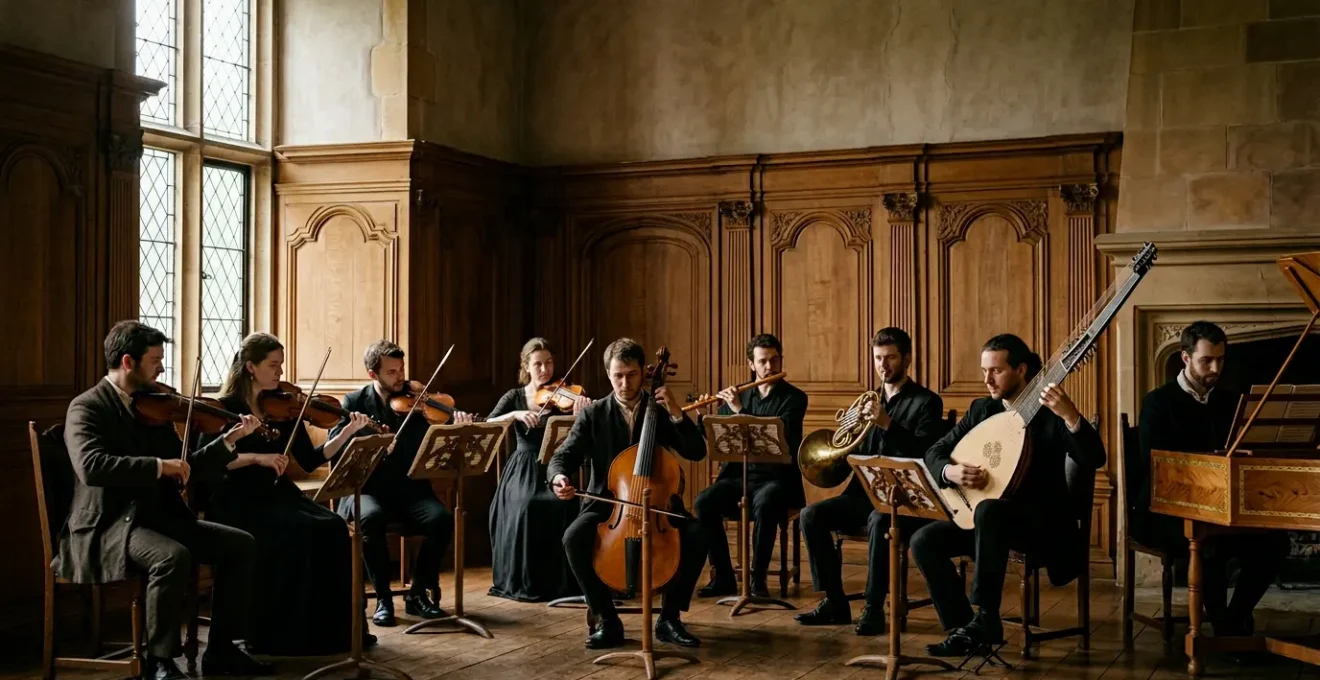
The stiffness you hear isn’t in the music; it’s a result of modern performers reading a Baroque score as a fixed blueprint instead of an improvised rhetorical script.
- Period instruments aren’t primitive; their distinct timbres are designed for conversational clarity in counterpoint.
- Baroque ornamentation isn’t mere decoration but a language of expressive, rhetorical gestures that give the music its persuasive power.
- Constant vibrato, a modern habit, smothers the music’s texture, whereas Baroque performers used it sparingly as a specific ornament.
Recommendation: To truly appreciate Baroque music, listen for it not as a grand monument, but as a passionate, live debate or a theatrical monologue filled with gestures and emotion.
There’s a curious phenomenon familiar to many a classical music fan in the UK. You’re listening to BBC Radio 3, perhaps, and a piece by Bach or Handel comes on. You recognise the genius, the intricate architecture of the composition, yet something feels… rigid. The performance, often by a world-class modern symphony orchestra, can sound strangely heavy, polished to a fault, and emotionally uniform. It’s like admiring a magnificent oak tree that has been encased in Lucite; the form is perfect, but the life, the texture, the very scent of the wood is gone.
The common assumption is that this is simply how the music is. We’re told about the mathematical precision of counterpoint and the formal structures of the era. But what if this perception of stiffness is entirely a modern projection? What if the problem isn’t with the music, but with our approach to it? The key doesn’t lie in playing the notes more perfectly or with more force. The truth is far more radical and exciting.
The secret is to stop treating Baroque music as a written text to be recited and to start understanding it as a spoken language to be performed. It is an art of rhetoric and persuasion, closer to passionate oratory or improvised theatre than the monumental concert hall experience we know today. The score is not a blueprint; it is a script, and it presumes the performer is a fluent, native speaker of its unwritten grammar, gestures, and dialects.
This guide will deconstruct the elements that make an early music performance feel alive. We will explore the tools of the language (the instruments), its expressive vocabulary (ornamentation and articulation), and the core grammatical rules that were once so common they were never written down. By the end, you won’t just understand why it can sound « wrong, » you’ll have the keys to hear it « right. »
Summary: The Living Language of Baroque Music
- Why Does Your Early Music Performance Sound Wrong Even When Playing the Right Notes?
- Why Do Baroque Pieces Sound More Colourful on Period Instruments?
- How to Add Baroque Ornaments That Sound Spontaneous Rather Than Mechanical?
- The Expressive Habit That Makes Your Baroque Performance Sound Victorian
- Period Instruments or Modern Orchestra: Which Serves Bach Better?
- Why Does Medieval Music Sound Mechanical When Performed with Modern Rhythmic Precision?
- Why Is the Clarinet Part Written in a Different Key Than What You Hear?
- In What Order Should You Explore Baroque Music for Maximum Appreciation?
Why Does Your Early Music Performance Sound Wrong Even When Playing the Right Notes?
The single greatest source of the « stiffness » in modern performances of early music is the fidelity to the score as the final word. A modern musician is trained to play what is written, exactly as it is written. In Baroque music, this is the equivalent of reading a Shakespearean soliloquy in a monotone, ignoring all punctuation, context, and dramatic intent. The notes are merely the starting point, a sketch that presumes a vast body of shared knowledge between composer and performer—an unwritten grammar that gave the music its life and flexibility.
This body of knowledge, transmitted orally through master-apprentice relationships, governed everything from rhythm and articulation to improvisation. Modern, score-only performances are therefore fundamentally incomplete, missing the very elements that would make them breathe. As musicologist and conductor William Christie has spent a career demonstrating, restoring these practices is not an academic exercise but an act of artistic resuscitation.
Case Study: The Doctrine of Unwritten Performance Practices
Early music treatises from the Baroque era reveal a rich world of performance conventions that are almost entirely absent from the musical scores themselves. These « unwritten rules » were considered so fundamental that composers didn’t need to notate them. They included concepts like Notes inégales (where notated equal notes are performed with a subtle long-short swing, particularly in French music), the real-time improvisation of chords and melodies by continuo players over a ‘figured bass’, and the use of varied bow strokes and silences to create speech-like, rhetorical phrasing. This reveals that the score was a guideline for a live, partially improvised event, not a definitive final text.
To perform this music authentically, one must become a detective, studying these historical sources to learn the dialect the composer spoke. Without this understanding of the unwritten conventions, even the most technically flawless performance will sound like a beautifully articulated but meaningless string of syllables.
Your Audit Checklist: The Unwritten Rules of Early Music
- Articulation as Rhetoric: Are you connecting every note in a seamless modern legato, or are you using varied bow strokes (détaché, staccato, louré) to create consonant-like separations that mimic speech patterns?
- Improvised Continuo Realization: Is the harpsichord or lute part a pre-written, static chordal accompaniment, or is it being spontaneously created with arpeggios, ornaments, and varied voicings over the bass line?
- Inégalité (Notes Inégales): In French Baroque style, are pairs of eighth notes being played with a metronomic, « straight » equality, or with a subtle, lilting long-short inequality that gives the music its characteristic swing and dance character?
- Affect-Driven Tempo: Is the tempo chosen based on a rigid metronome marking, or is it flexible and determined by the emotional character (the Affect) of the piece—faster for joyful affects, slower and more measured for sorrowful ones?
- Dance-Grounded Pulse: Can you feel the physical gesture of the underlying dance (e.g., the processional stride of an Allemande, the skipping energy of a Gigue) in the performance’s phrasing and accentuation, or is it just a uniform series of beats?
Why Do Baroque Pieces Sound More Colourful on Period Instruments?
A common misconception is that period instruments are simply « primitive » versions of their modern counterparts. This couldn’t be further from the truth. A Baroque violin is not a failed Stradivarius; it is a different tool designed to achieve a different aesthetic goal. The sound of period instruments is fundamental to the clarity, texture, and rhetorical power of Baroque music. Modern instruments, engineered for power, projection, and a homogenised tone in large concert halls, fundamentally alter the musical fabric.
Take string instruments, for example. Gut strings (made from animal intestine) on a Baroque violin have a completely different sonic profile from modern steel strings. They have a softer, more complex, and more transparent tone with a distinct attack and decay for each note. This creates a sonic space where individual melodic lines in complex counterpoint can coexist without blurring into a single mass of sound. It’s the difference between hearing a conversation between four distinct individuals and hearing a chorus shouting in unison. As the American Classical Orchestra notes, « The tone of a gut string has an ‘envelope’ which allows the other parts of a multi-voice composition to be heard. »
This principle extends to all instruments of the era. The wooden Baroque flute has a breathy, gentle tone, a world away from the brilliant, penetrating sound of a modern metal flute. The valveless natural horn or trumpet has a palette of subtly different tone colours for each note, depending on the harmonic series, unlike the uniform tone produced by a modern valved instrument. These timbral variations are not defects; they are expressive features that composers knew and exploited.
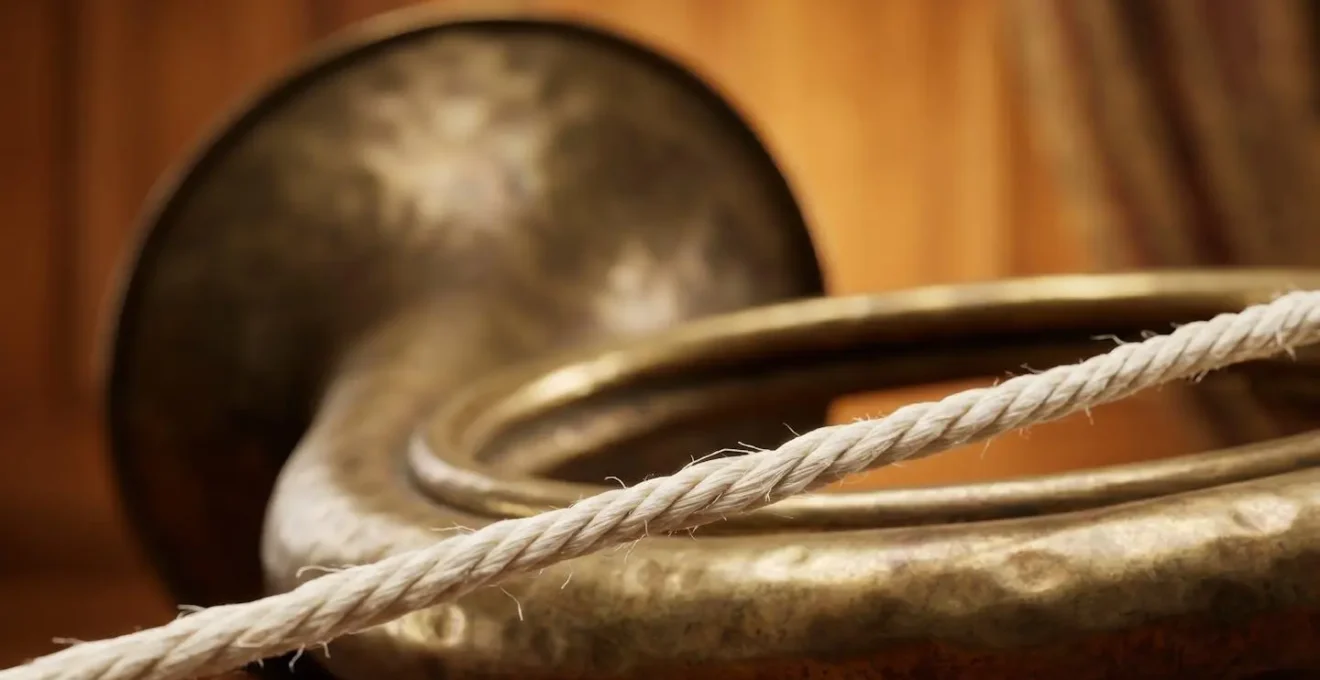
The result is a sound world that is more colourful, more textured, and more transparent. It’s a sound designed for the intimacy of a chamber, where the subtle nuances of each instrument’s voice can be clearly discerned. Using modern instruments to play Baroque music is like translating a delicate watercolour painting into a bold oil canvas—the image might be the same, but the texture, light, and soul of the work are irrevocably changed.
How to Add Baroque Ornaments That Sound Spontaneous Rather Than Mechanical?
Nothing contributes more to a « stiff » Baroque performance than ornamentation treated as a mechanical exercise. When a student learns that « a trill is a rapid alternation between two notes, » and applies it with metronomic precision every time the « tr » symbol appears, the music dies. This is because Baroque ornaments are not decorative flourishes; they are the active gestures of musical rhetoric. They are the raised eyebrow, the pointed finger, the sigh, the gasp—the very things that turn a statement into a persuasive argument or a heartfelt plea.
The key to spontaneous-sounding ornamentation is to stop thinking about patterns and start thinking about function and feeling. What is this ornament *doing* here? Is this appoggiatura creating a painful, dissonant « lean » before resolving? Is this trill building energetic tension before a cadence? Is this turn a light, playful flick of the wrist in a cheerful gigue? The physical and emotional character of the ornament must match the prevailing Affect of the musical phrase.
Historical Treatise on Baroque Improvisation: C.P.E. Bach’s Essay
In his seminal ‘Essay on the True Art of Playing Keyboard Instruments’, C.P.E. Bach, one of J.S. Bach’s most famous sons, provides a crucial window into the mindset of the era. He makes a clear distinction between essential, notated embellishments and those which the performer was expected to improvise based on the harmonic context and emotional character of the music. This treatise confirms that performers were not just decorators but co-creators, using ornaments as a form of real-time rhetorical punctuation to make the music more expressive and pleasing, not just more complex.
To achieve this spontaneity, the performer must internalise the dance rhythms and harmonic language of the style. True Baroque improvisation flows from this deep understanding, responding to the music’s needs in the moment. Here’s a practical approach to cultivate that mindset:
- Study the Affect: First, identify the emotional character (joy, sorrow, majesty) that the phrase aims to convey. Baroque composers used specific keys, rhythms, and melodic shapes to evoke these specific, codified emotions. Your ornamentation must serve and enhance this affect.
- Connect to Dance Pulse: Feel the underlying dance rhythm (Allemande, Courante, Sarabande, Gigue) in your body. Let its physical pulse guide the speed, weight, and placement of your ornaments. A Sarabande’s ornament will have a different weight and timing than a Gigue’s.
- Improvise Harmonically: Instead of just plugging in a pre-learned pattern, listen to the chord progression. Use your ornaments to heighten the harmonic tension and release. A well-placed appoggiatura on a dominant chord can create a moment of exquisite tension before it resolves, a powerful rhetorical device.
The Expressive Habit That Makes Your Baroque Performance Sound Victorian
If there is one single habit that instantly stamps a performance of Baroque music as anachronistic, it is the use of continuous, uniform vibrato. For a modern string player or singer, vibrato is a default part of tone production, a constant oscillation of pitch used to add warmth, richness, and projection. To play without it feels naked, even wrong. Yet, applying this wall-to-wall vibrato to Bach or Handel is a historical and aesthetic error, like serving a delicate sushi dish drenched in ketchup. It smothers the clean lines of counterpoint, blurs the harmonic clarity, and imposes a 19th-century Romantic sensibility onto an 18th-century art form.
Historical sources are clear on this point. In the Baroque era, vibrato was considered an ornament, a specific expressive effect to be applied consciously and sparingly. It was a special colour in the palette, not the foundation of the entire painting. As The Strad magazine summarises from historical treatises, « During the Baroque era, vibrato was used sparingly, for emphasis on long, accentuated notes in pieces with an affect or character to which it was suited. Being regarded as an ornament, in principle it was used on single notes like any other. » This was a specific rhetorical gesture, not a constant state of being.
The shift to continuous vibrato was a gradual development, solidifying its place as a standard technique much later. In fact, historical research confirms that continuous vibrato became standard only in the 20th century, championed by violinists like Fritz Kreisler. Its purpose was to create a more intense, passionate, and seamless sound suitable for the grand emotionalism of Romantic and post-Romantic music performed in ever-larger concert halls.
When this constant, wide vibrato is applied to Baroque music, it has a disastrous effect on the texture. In a Bach fugue, where three, four, or even five independent melodic lines are woven together, the clean, transparent tone of non-vibrato playing is essential to allow the listener to follow each « voice » in the conversation. Continuous vibrato causes these lines to bleed into each other, creating a thick, soupy texture that undermines the contrapuntal genius of the music. To reclaim the sound-world of the Baroque, performers must unlearn this modern habit and rediscover vibrato for what it was: a powerful, but occasional, rhetorical device.
Period Instruments or Modern Orchestra: Which Serves Bach Better?
This question often sparks passionate debate. Is a performance of Bach on modern instruments in a grand symphony hall a betrayal, or is it a valid re-interpretation? The answer lies not in a judgment of « better » or « worse, » but in understanding that they are fundamentally different experiences pursuing different goals. As the Philharmonia Baroque Orchestra & Chorale puts it, the modern orchestra « adapts—or ‘modernizes’—music composed for earlier instruments, techniques, and settings. Essentially, a newer idea of sound is applied to older compositions. »
A modern symphony orchestra is a magnificent machine, a product of the 19th and 20th centuries engineered for power, blend, and the ability to fill a 2,000-seat auditorium with a rich, homogenous sound. Its string section is large, its wind instruments are designed for maximum projection and perfect intonation, and its ethos is one of unity and seamlessness. When this machine plays Bach, it inevitably transforms him. The intricate contrapuntal conversations can become lost in a glorious but monolithic wall of sound. The balance is entirely different; a single modern trumpet can easily overpower a section of 20 violins, something unthinkable with a valveless Baroque trumpet.
A period instrument orchestra, by contrast, is built on a different philosophy: one of transparency, textural variety, and rhetorical agility. It is smaller, more intimate, and comprised of instruments whose individual timbres are meant to be distinct, not blended. The goal is not a unified mass but a dynamic dialogue between individual voices. The performance venue itself is part of this philosophy; Baroque music was intended for a church or an aristocratic chamber, not a vast concert hall. The scale, the acoustics, and the relationship between performer and audience were all more intimate.
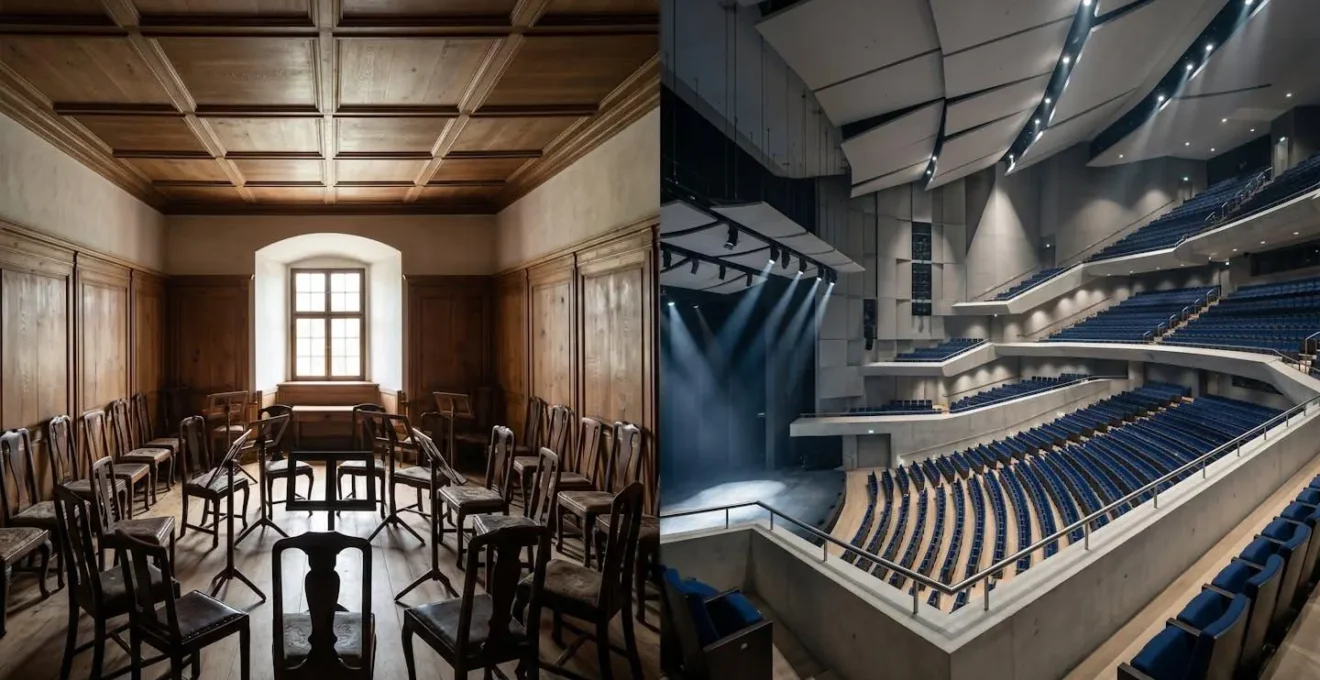
Ultimately, a modern orchestra presents Bach as a grand, architectural monument to be admired from a distance. A period orchestra presents Bach as a living, breathing drama unfolding in the same room as the listener. Neither is inherently invalid, but only one attempts to reconstruct the aesthetic and sonic world in which the music was originally conceived. For a listener seeking to understand why a piece feels « stiff, » hearing it in the transparent, conversational context of a period ensemble is often a revelation.
Why Does Medieval Music Sound Mechanical When Performed with Modern Rhythmic Precision?
While our focus is Baroque, a brief look at its predecessor, Medieval music, illuminates an even deeper-seated modern bias: our obsession with the metronome. When Medieval music is performed with the relentless, unyielding pulse of a modern click track, it sounds not just stiff, but utterly robotic and unnatural. The reason is that our entire modern conception of rhythm is based on a regular, recurring metric grid, whereas much of Medieval rhythm was based on something far more fluid: the rhythms of poetry and speech.
Musicologists have identified a system known as « rhythmic modes, » particularly in the music of the Notre Dame school around the 12th and 13th centuries. These were not based on a simple « 1-2-3-4 » count but on repeating patterns derived from classical poetic feet. Think of the long-short pattern of a trochee (DUM-da) or the short-long of an iamb (da-DUM). These patterns created a far more subtle and supple rhythmic language, one that ebbed and flowed with the character of the text it was setting.
As one analysis of performance practice puts it, « Modern music is ‘metrical’ (based on a regular, recurring pulse), while much Medieval music used ‘rhythmic modes’ (patterns derived from poetic feet, like long-short). Imposing a modern metronome beat destroys these fluid, speech-like patterns. » This is a crucial insight that carries over into the Baroque. While Baroque music is certainly more metrically regular than Medieval chant, it retains this fundamental connection to dance and rhetoric. Its pulse is not that of a machine, but of a dancing body or a declaiming orator. The « beat » should have weight, direction, and gesture—a strong first beat in a Sarabande, a light upbeat in a Gigue—not the cold, indifferent tick of a clock.
To perform early music effectively, one must trade the metronome for a dancer’s feet and a poet’s ear. You must feel the physical lilt of the dance and the natural cadence of the melodic line as a spoken phrase. Forcing this music onto the rigid grid of modern rhythmic precision is a primary cause of mechanical-sounding performance, stripping it of its inherent grace and vitality.
Why Is the Clarinet Part Written in a Different Key Than What You Hear?
The principle of historical context shaping the written score applies not just to expressive choices, but to the very notes themselves. The phenomenon of transposing instruments, like the clarinet, is a perfect example. A player might see a ‘C’ on their sheet music, play the fingering for ‘C’, but the note that sounds is a ‘B-flat’. This isn’t a mistake; it’s a brilliant, practical solution to a historical, physical problem, and a fascinating window into the « unwritten » conventions of musicianship.
In the 18th century, before the complex keywork of the modern clarinet was perfected by makers like Theobald Boehm, instruments were far less versatile. A simple clarinet with few keys could play beautifully in one or two closely related keys, but would struggle with difficult, awkward cross-fingerings in more remote keys. To solve this, instrument makers built clarinets in various sizes and fundamental pitches (in C, in B♭, in A, etc.). As a result, historical instrument-making practices show that 18th-century clarinetists often carried 6-8 clarinets in different keys to performances, choosing the one best suited for the key of a particular piece.
Transposition was the ingenious system devised to manage this complexity. Music was written for all these different clarinets so that the *written* note ‘C’ always corresponded to the same *fingering* (e.g., all fingers down). This allowed a player to switch between their A clarinet and their B-flat clarinet and still read the music in the same way, without having to mentally transpose on the fly. The instrument itself would handle the transposition. As Wikipedia’s entry on the topic explains, « Music is often written in transposed form for these groups of instruments so that the fingerings correspond to the same written notes for any instrument in the family… A musician who plays several instruments in a family can thus read music in the same way regardless of which particular instrument is being used. »
So, when you see a clarinet part written in a different key, you are looking at a living fossil of this practical tradition. It’s a reminder that the musical score is not an abstract, absolute representation of sound but a piece of practical technology shaped by the physical realities of instrument construction and the needs of the working musician.
Key Takeaways
- Music as Rhetoric: Stop listening for architecture; listen for oratory. Hear phrases as questions, arguments, and exclamations.
- The Body and the Beat: The pulse of Baroque music is not a metronome; it is the physical gesture of dance and the cadence of speech.
- Timbre is Texture: The varied, transparent sounds of period instruments are not a defect but a feature, designed for the clarity of contrapuntal conversation.
In What Order Should You Explore Baroque Music for Maximum Appreciation?
Now that we have deconstructed the « language » of Baroque music—its rhetoric, its dance-based pulse, its conversational textures—how can a listener best learn to hear it fluently? Simply diving into the most complex works, like Bach’s *The Art of Fugue*, can be like trying to read James Joyce’s *Ulysses* without first learning to read English. A more structured approach, building from the foundational elements upwards, can yield far greater appreciation.
The goal is to train your ear to listen for the right things: for the dance in the rhythm, for the emotion in the melodic shape, and for the dialogue between the voices. By starting with the most physically immediate and texturally clear forms of the music, you build a foundation of understanding that will unlock the richer, more abstract works. It’s a journey from the body to the mind, from the dance floor to the cathedral.
This progressive listening path allows you to internalise the core principles of the Baroque aesthetic one at a time. You first learn the vocabulary of dance, then the grammar of emotion, and with those tools, you are finally ready to appreciate the high poetry of counterpoint not as a dry mathematical exercise, but as a deeply expressive and dramatic art form. This journey transforms the act of listening from passive reception to an active, engaged participation in the musical conversation.
Here is a practical, three-stage journey to guide your exploration and cultivate a deep appreciation for the Baroque style:
- Stage 1 – Start with Dance Suites: Begin with works like Bach’s Cello Suites or Handel’s Water Music. The primary goal here is to identify the core dance rhythm of each movement. Feel the moderate, processional walk of the Allemande; the quick, running steps of the Courante; the slow, weighted emphasis on the second beat of the Sarabande; and the lively, skipping energy of the Gigue. This physical, rhythmic foundation is the bedrock of all Baroque music.
- Stage 2 – Progress to Vocal Works (Cantatas & Opera): Now, explore Bach cantatas or Vivaldi opera arias to understand the Doctrine of the Affections. Listen for how composers used specific musical figures to express the emotions in the text. Notice the « word painting »—where a melody ascends to heaven, a harmony becomes painfully dissonant on the word « cruel, » or the rhythm gallops along with a text about riding. This will teach you the music’s rhetorical and emotional grammar.
- Stage 3 – Graduate to Abstract Counterpoint: With your rhythmic and affective literacy established, you are ready to tackle the great polyphonic forms like Bach’s Art of Fugue or his Brandenburg Concertos. You will now be able to hear these works not as dense, mathematical puzzles, but as what they truly are: thrilling, dramatic, and emotionally charged conversations between multiple dancing voices.
Your journey into the true sound of the Baroque begins now. Put on a recording of a dance suite by a great period ensemble, close your eyes, and listen not just with your ears, but with your body. Feel the pulse, hear the conversation, and let the music speak to you in its native tongue.