
Contrary to the belief that variations in folk songs are memory errors, they are the very mechanism that keeps the music alive, a process of creative re-creation rather than flawed repetition.
- Oral transmission is an act of perpetual re-composition, where each singer adapts a song’s melodic and lyrical DNA to their own voice and community.
- This « folk process » naturally filters and refines melodies over generations, ensuring the most memorable and culturally resonant elements survive.
Recommendation: Shift your mindset from seeking a single « authentic » version to appreciating each performance as a valid, living snapshot of a song’s long journey through time.
For any musician or enthusiast steeped in the world of traditional music, the question is a familiar one. You learn a tune in a pub session in Donegal, hear it again years later in a Bristol folk club, and find it has a different rhythm, a new turn of phrase, or even a missing verse. The natural impulse, trained by a culture of recordings and written scores, is to ask: which one is the « correct » version? This question, however, starts from a false premise. It assumes music passed down through generations should behave like a printed text, static and definitive. The truth is far more dynamic and profound.
The constant evolution of folk songs isn’t a flaw of oral transmission but its most fundamental and vital feature. It is a living process of cultural memory, communal authorship, and creative regeneration. To see these changes as mere « mistakes » is to miss the point entirely. This is not a failure of memory, but a demonstration of how culture breathes, adapts, and survives. The song’s identity is not found in a single, fixed artefact, but in the continuous chain of its telling and retelling. This fluidity is the song’s lifeblood, not a sign of its decay.
This article explores the engine of this change. We will deconstruct the very idea of a « correct » version, examine the traditional methods of aural learning, and see how these practices differ across the rich tapestry of British folk traditions. More importantly, we’ll uncover how the well-intentioned act of documentation can sometimes stifle this life, and how this principle of « creative variation » extends surprisingly into the seemingly fixed worlds of classical music and even ancient written manuscripts. It’s a journey from the singer’s memory to the scribe’s hand, revealing that the true nature of music is often found between the notes.
This guide will walk you through the core principles of oral transmission, revealing why a song’s mutability is its greatest strength. The following sections break down this fascinating cultural phenomenon.
Summary: The Unwritten History of a Folk Song’s Journey
- Why Is There No « Correct » Version of a Traditional Folk Song?
- How to Learn a Folk Song Without Sheet Music in the Traditional Way?
- English, Scottish, Welsh or Irish: How Do Oral Traditions Differ Across Britain?
- The Documentation Mistake That Kills the Life in Traditional Music
- When Should You Record Elderly Tradition Bearers Before It’s Too Late?
- Why Was Vivaldi Forgotten for 200 Years Before Becoming a « Genius » Again?
- Which Medieval Manuscript Version Should You Use When Sources Contradict?
- Why Does Your Early Music Performance Sound Wrong Even When Playing the Right Notes?
Why Is There No « Correct » Version of a Traditional Folk Song?
The concept of a single, definitive version of a folk song is a modern invention, born from the age of print and recording. In a living oral tradition, a song doesn’t belong to a single author; it belongs to the community that sings it. Each performance is a link in an unbroken chain, and the song is shaped by collective memory and taste. As the Britannica Encyclopedia’s scholars on the topic note, the version you hear is not just one person’s interpretation. As they state, « The form of a folk song as heard at any one time, however, is likely to have been very much affected by the entire community because of its life in oral tradition. » This means the song is a shared cultural asset, polished and altered by generations of singers.
This doesn’t mean the song dissolves into chaos. On the contrary, research reveals a fascinating paradox. While details constantly shift, the core melodic identity of a tune often remains remarkably resilient. This principle, known as melodic stability, suggests that the « folk process » acts as a natural filter.
Case Study: The Melodic Stability Paradox in Folk Song Transmission
A 2017 study analysing Dutch folk songs found that while folk melodies undergo constant variation through oral transmission, they maintain surprising melodic stability. The most memorable and singable phrases survive and are passed on—a concept known as ‘frequency of occurrence’—while less memorable or awkward passages are naturally smoothed over or filtered out across generations. This demonstrates that variation and continuity are not opposing forces but two sides of the same coin, challenging the very notion of a single « correct » version and highlighting the tradition’s self-correcting nature.
Therefore, a folk song is not a static object but a fluid entity with a stable core. The variations aren’t errors; they are the song adapting to its environment, carried by the breath and memory of its singers. The « correct » version is, in fact, the sum of all its variations across time.
How to Learn a Folk Song Without Sheet Music in the Traditional Way?
Learning a folk song by ear is not a simple act of transcription; it is an act of absorption and re-creation. The traditional way goes far beyond memorising notes and words. It involves internalising the rhythm, the emotional contour, the ornamentation, and the subtle nuances of a performance. This process is less about ‘carbon copying’ and more about internalising a song’s DNA to then regenerate it. Folklorist Emma E. Patterson describes this perfectly when she states that oral transmission is about « recreating and perpetuating a song, » not just repeating it. It is an active, creative process.
This aural learning process relies on the brain’s natural ability to identify and simplify patterns. This explains why certain melodic changes occur predictably over time. For instance, research published in the Music Perception journal found that as songs are passed down orally, they tend to become more streamlined. The study showed that experimental simulations of oral transmission show that folk songs become more pentatonicized at cadence points. Essentially, the human mind simplifies complex melodic endings into more stable, memorable forms. This is not a mistake but a cognitive optimisation.

As the image suggests, aural learning is about attuning the ear to these patterns, not just individual notes. To learn in this way, one must listen repeatedly, hum the melodic contour before attempting the words, and focus on the rhythmic feel. The goal is to capture the spirit, not just the letter, of the song. Once the core is internalised, the singer has the implicit permission of the tradition to let their own voice find its place within the song’s history, making it their own while honouring its past.
English, Scottish, Welsh or Irish: How Do Oral Traditions Differ Across Britain?
While sharing the common thread of oral transmission, the folk traditions across Britain and Ireland have evolved with distinct characteristics, often shaped by language, history, and local instrumentation. These are not homogenous entities but a family of related yet unique musical dialects. An English ballad tradition, heavily reliant on narrative storytelling, will feel different from the driving rhythm of a Scottish fiddle tune meant for dancing.
The Celtic nations, in particular, showcase fascinating divergences. Musician and scholar Alan Stivell highlights a key difference between the two main branches of Celtic music. He points out that Gaelic traditions (Irish, Scottish) are distinct from Brythonic ones (Welsh, Cornish). As he explains, this is due to « the extended range (sometimes more than two octaves) of Irish and Scottish melodies and the closed range of Breton and Welsh melodies (often reduced to a half-octave), and by the frequent use of the pure pentatonic scale in Gaelic music. » This shows how deep-seated melodic preferences create a distinct regional character.
The influence of language is perhaps most profoundly seen in Wales, with a practice that has no direct equivalent in its neighbouring traditions.
Case Study: Welsh Cynghanedd’s Influence on Melodic Structure
The Welsh tradition of ‘Penillion’ singing perfectly illustrates how language can directly shape musical form. In this unique art, a singer improvises a counter-melody over a well-known tune played by a harpist. The true artistry lies in how the singer must align the stressed syllables of the complex Welsh poetry (following the rules of ‘cynghanedd’) with the main beats of the harp’s melody. This intimate link between poetic metre and musical beat has created a performance practice utterly distinct from the free-flowing melodic lines of Irish Sean-nós or the narrative focus of many Scottish ballads.
From the unaccompanied lyrical storytelling of English folk songs to the intricate interplay of poetry and music in Wales, each tradition has its own unwritten rules and aesthetic priorities. Understanding these differences is key to appreciating the rich diversity that thrives under the single umbrella of « folk music. »
The Documentation Mistake That Kills the Life in Traditional Music
The invention of the phonograph and, later, digital recording seemed like the ultimate solution for « saving » folk music. The impulse to capture a song in a single, permanent form is understandable. It feels like an act of preservation. However, this act of fixing a song in time can inadvertently freeze it, severing it from the very process of change that keeps it alive. When one recorded version becomes the « official » one—canonised on an album or in an archive—it can halt the natural, gradual evolution that is the hallmark of oral tradition.
The singer who learns from a recording is more likely to replicate it exactly, behaving like a photocopier rather than a creative link in a chain. They are reproducing an artefact, not participating in a living process. This standardisation strips away the regional variations and personal interpretations that give the tradition its richness. The song becomes a museum piece, to be admired behind glass, rather than a tool to be used, shared, and shaped by the community.
In the digital age, this effect is amplified. While streaming platforms make folk music more accessible than ever, they also accelerate this process of homogenisation. An analysis of modern trends highlighted this risk, noting that while digital access is a boon, the associated commercialization risks losing original cultural context and promoting a single « hit » version over countless local variants. The mistake, therefore, is not documentation itself, but confusing the document with the tradition. A recording is a snapshot, not the entire landscape. It’s a valuable photograph of a river at one moment, but it is not the river itself, which must be allowed to continue flowing.
When Should You Record Elderly Tradition Bearers Before It’s Too Late?
The answer is, simply, now. But with great care and ethical consideration. The knowledge held by elderly tradition bearers is a finite, irreplaceable library of cultural memory. Every song, story, or piece of lore they hold is unique to their life experience and the community that shaped them. When they pass, that specific link in the chain is gone forever. Documenting their repertoire is a matter of cultural urgency, an act of stewardship for future generations. It is a race against time to preserve not just melodies and words, but the lived experience behind them.
However, the history of folk collection is fraught with ethical complexities. Early collectors often saw themselves as rescuing « primitive » art, sometimes failing to properly credit the singers or understand the context of the songs they collected. The work of Lucy McKim Garrison is a powerful historical example of both the value and the pitfalls of this work.
Case Study: Lucy McKim Garrison’s Documentation of Enslaved African American Songs
Abolitionist and musicologist Lucy McKim Garrison (1842-1877) was one of the first researchers to document and publish the spirituals and traditional songs of enslaved African Americans in the southern United States. Her work from 1867 preserved an irreplaceable cultural heritage that would otherwise be lost. Yet, modern scholars approach it with nuance, recognising it as a ‘snapshot’ taken under specific power dynamics. Her collection is invaluable, but it underscores the ethical responsibility of the collector: to document with respect, acknowledge context, and understand that they are capturing one moment in a tradition’s life, not its final, definitive form.
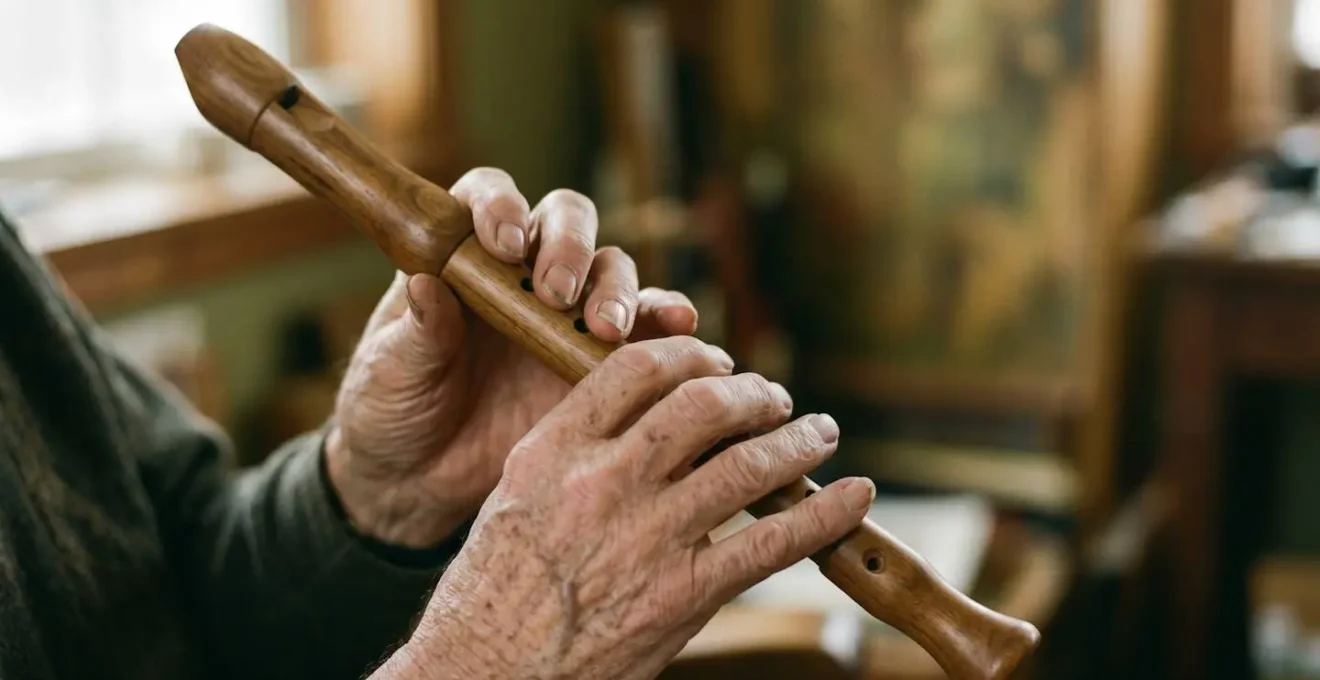
The act of recording a tradition bearer is more than a technical task; it’s a human interaction that requires trust, respect, and a deep understanding of one’s role. The goal is not to « extract » songs, but to create a space where a tradition bearer feels empowered to share their gift. This means being a good listener, asking about the stories behind the songs, and ensuring the person being recorded retains ownership and agency over their own culture.
Your Action Plan: Ethically Documenting a Tradition Bearer
- Establish Contact & Trust: Approach with respect, not as a researcher, but as an interested listener. Build a relationship first. Clearly explain your purpose and how the recordings will be used.
- Collect Context, Not Just Content: Before hitting record, ask about the songs. Where did they learn them? Who did they learn them from? What do the songs mean to them? This context is as valuable as the melody itself.
- Ensure Consent & Control: Use clear, simple consent forms. Ensure the tradition bearer understands they can stop at any time and decides who can access the final recordings. They are the expert and the owner.
- Analyse the Performance’s Uniqueness: During listening, note the specific ornaments, phrasings, or lyrical variants that make their version unique. This is the living part of the tradition you are capturing.
- Plan for Preservation & Access: Don’t let the recordings sit on a hard drive. Make a clear plan to archive them (e.g., with a local university or cultural institution) and share them back with the singer’s family and community, as per their wishes.
Why Was Vivaldi Forgotten for 200 Years Before Becoming a « Genius » Again?
The story of Antonio Vivaldi presents a fascinating parallel to the fragility of oral tradition, even in the world of written music. For nearly two centuries, the composer of « The Four Seasons » was largely forgotten, his vast body of work gathering dust in archives. His « rediscovery » in the 20th century was not inevitable; it required a conscious effort by scholars to unearth, edit, and champion his manuscripts. This demonstrates a crucial point: even a written score is not immune to being lost from cultural memory. If no one plays the music or values it, it effectively ceases to exist, just like a folk song that is no longer sung.
This blurs the line we often draw between « folk » and « classical » music. The processes of transmission, loss, and rediscovery are more similar than we think. Furthermore, the two worlds have always been in conversation. As Britannica notes, « Many folk songs collected in oral tradition have been traced to literary sources, often of considerable antiquity. » A popular tune from a 17th-century opera could escape into the countryside, shed its formal origins, and become a « folk song, » passed down and altered by generations of singers who had no knowledge of its composer.
Vivaldi’s period of obscurity shows that a composition’s survival depends on a continuous chain of performance and appreciation. Without this living context, a written score is just ink on paper. A folk song, without its community of singers, is just silent air. Both rely on an unbroken tradition of human engagement to remain alive, reminding us that all music, regardless of its origin, is vulnerable to the tides of time and taste.
Which Medieval Manuscript Version Should You Use When Sources Contradict?
For a performer of early music, facing two 14th-century manuscripts with different versions of the same motet presents a familiar dilemma. Which is the « authentic » one? This problem is the written equivalent of hearing two different versions of a folk ballad. The instinct to find the « original » is strong, but it overlooks the nature of pre-print culture. Before the printing press standardised texts, every copy was made by hand, and every scribe was, in a sense, a performer.
Scribes were not human photocopiers. They made errors, corrected what they perceived as mistakes in their source copy, and sometimes « improved » or adapted the work to their own tastes or the preferences of their patron. This process of textual fluidity mirrors the folk process in remarkable ways. As scholar Emma E. Patterson compellingly argues, « Medieval scribes, like folk singers, introduced variations, errors, and personal improvements. » Therefore, she concludes, « Contradictory manuscripts are the written equivalent of differing oral versions of a song. »
This perspective transforms the problem. Instead of a frustrating search for a single true source, the performer is presented with a family of related versions, each a valid snapshot of the piece’s life at a particular time and place. The modern performer’s task is not to slavishly reconstruct one version, but to understand the range of possibilities the manuscripts present. Choosing which version to use—or even creating a composite—becomes an informed artistic decision, one that acknowledges the work was never a single, static entity.
Key Takeaways
- The « folk process » is a feature, not a bug: Variation and change are signs of a healthy, living tradition, not memory failures.
- Learning is re-creation: Aural learning is an active process of internalising and regenerating a song, not just copying it.
- Documentation is a snapshot, not the whole story: A recording can « freeze » a song, and must be treated as one moment in a flowing river of tradition.
- Fluidity is universal: The principles of variation and transmission apply not only to folk songs but also to written music, from medieval manuscripts to the works of classical composers.
Why Does Your Early Music Performance Sound Wrong Even When Playing the Right Notes?
This is a frustration many musicians encounter, whether in folk or early music. You can play every note on the page with perfect accuracy, yet the performance feels stiff, lifeless, and somehow « wrong. » The reason is that a written score—be it a medieval manuscript, a baroque concerto, or a simple folk tune in a songbook—is an incomplete set of instructions. It captures the skeleton of the music, but not its soul. The life of the music resides in the unwritten rules of performance practice.
This unwritten knowledge includes rhythm, phrasing, ornamentation, and improvisation—elements that are assumed knowledge within a living tradition. As folk music scholars note, for much of history, notation was minimal at best. They explain that « The accompanying chords and harmony parts for a song would be improvised…performers would make their own choices and compose spontaneous arrangements. » The notes were a starting point, not a complete blueprint. The real art was in what the performer brought to them.
The 20th century shift towards learning from recordings created a new dynamic, but the core issue remains. Research shows that in the 20th century, transmission through recordings and media began to supplant the face-to-face learning that defined oral tradition. While this preserved certain styles, it also risked creating a generation of players who could imitate a recording but lacked the deep understanding to improvise or adapt the music themselves. A performance sounds « wrong » when it is a technically perfect but culturally hollow imitation of an artefact, rather than a living, breathing interpretation rooted in an understanding of the tradition’s conventions.
The solution is to treat the score or recording not as a final destination, but as a map. It shows you the way, but the journey is yours to make. This involves deep listening to a wide range of tradition bearers, understanding the rhythmic feel, and learning the vocabulary of ornamentation. It means giving yourself permission to make the music your own, just as countless singers and musicians have done for centuries.
By embracing the fluidity of traditional music and understanding your role as a creative link in its chain, you move from being a mere reproducer of notes to a true participant in a living, breathing art form. Your performance will no longer sound « wrong, » but will become another valid and vital chapter in the song’s long history.