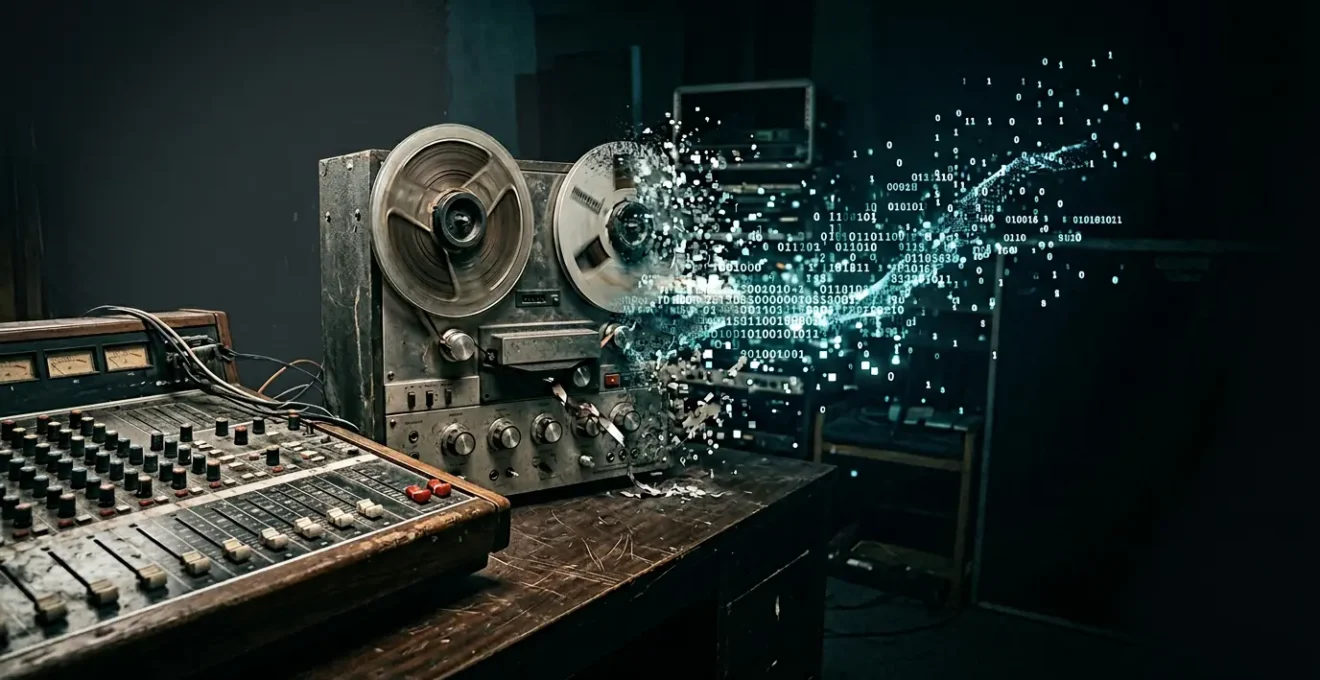
Most composers believe saving a digital file means it’s safe forever. This is a dangerous myth. Digital information is inherently fragile, constantly threatened by software obsolescence and storage failure. True preservation isn’t a one-time save, but an active, ongoing process of curation to combat this « digital decay » and ensure your musical legacy outlives the technology used to create it.
As a composer, there’s a quiet satisfaction in hitting ‘Save’. The final chord is entered, the mix is bounced, and the file is stored. It feels permanent, secure, a digital testament to your creative work. We place our faith in hard drives and cloud servers, believing our music is immortalised in bits and bytes. This belief, however, is one of the greatest risks to your life’s work.
The common advice—back up your files—is dangerously simplistic. It doesn’t account for the relentless march of technological change, the silent corruption of data over time, or the simple human error that can render decades of work inaccessible overnight. We treat our digital creations like photographs in a shoebox, assuming they’ll be there when we next look. But digital files are not static objects; they are complex environments dependent on specific software, hardware, and formats that are constantly heading towards extinction.
The truth is that digital preservation is not a passive act of storage but an active, urgent discipline. The real key to ensuring your music survives is not just to save it, but to fight against its inherent fragility. This requires a shift in mindset: you are not just a creator, but the first archivist of your own work. This article will guide you through the practical, preservation-focused steps needed to combat digital decay and build a resilient archive for your compositions, ensuring they can be heard by generations to come.
This guide unpacks the hidden dangers of digital storage and provides an archivist’s framework for securing your legacy. We will explore format choices, disaster-proof storage strategies, legal preparations, and the crucial act of documenting the intangible ‘life’ of your music.
Contents: A Composer’s Guide to Surviving the Digital Dark Age
- Why Can’t Archives Open Files From Just 20 Years Ago?
- How to Archive Your Compositions So They Survive Technology Changes and Disasters?
- Sibelius, Finale or MusicXML: Which Format Will Still Be Readable in 50 Years?
- The Storage Mistake That Lost a Composer’s Entire Life’s Work Overnight
- What Legal and Practical Steps Ensure Your Music Survives You?
- The Documentation Mistake That Kills the Life in Traditional Music
- The Songwriting Pride That Prevents Your Best Songs From Reaching Audiences
- Why Do Folk Songs Change Every Time Someone Sings Them?
Why Can’t Archives Open Files From Just 20 Years Ago?
The digital world operates on a terrifyingly short timescale. As archivist Jeff Rothenberg famously quipped, « digital information lasts forever—or five years, whichever comes first. » This isn’t just a clever line; it’s a fundamental principle of what we call digital decay. Unlike a paper score that can sit on a shelf for a century, a digital file requires a whole chain of technology to be readable: the right hardware, the right operating system, and the right version of the right software. When any link in that chain breaks, the file becomes a block of meaningless data.
This phenomenon is known as technological extinction. A file created in a popular 1990s music program may be perfectly preserved on a disk, but without the archaic computer and software to open it, it is effectively lost forever. Archives are filled with these digital ghosts. Even physical media has a surprisingly short lifespan. For instance, the global audiovisual archival community has warned that the window for preserving magnetic media like tapes is rapidly closing, with perhaps only a few years left to digitise them before both the media and the playback machines are gone.
For your own work, this means that the Sibelius or Logic file you save today is on a countdown clock. The software company could go out of business, a future version of the software could drop support for older files, or the operating system it runs on could become obsolete. Relying on a single, proprietary format is like storing your life’s work in a vault to which only one person holds the key—and that person is getting older every day.
How to Archive Your Compositions So They Survive Technology Changes and Disasters?
The only defence against inevitable digital decay and unforeseen disasters is a strategy of preservation-in-depth. This means creating multiple, independent layers of protection around your work, so that if one layer fails, others survive. A robust archival strategy is not about finding one perfect storage location; it’s about building a resilient system that anticipates failure. This involves a combination of file format choices, storage media, geographic distribution, and rigorous verification.
The classic model for this is the 3-2-1 rule: keep at least three copies of your data, on two different types of media (e.g., solid-state drive and cloud), with at least one copy off-site. This protects you from everything from a single hard drive failure to a house fire. But for a composer’s archive, we must go further, focusing on the quality and integrity of the files themselves. This means choosing lossless formats (like WAV or FLAC for audio), documenting everything with metadata, and regularly checking for data corruption using checksums—a digital fingerprint that can tell you if a file has changed even by a single bit.
Your Five-Point Preservation Audit: A Plan for Action
- Inventory Your Assets: Create a master list of all compositions, including project files, audio bounces, scores, and related documents. Note where every single file is located.
- Assess Format Risk: For each work, identify the file formats used. Flag any proprietary formats (.sib, .logicx) as high-risk and schedule them for migration to an open format like MusicXML or PDF/A.
- Verify Your Backups: Don’t just assume your backups work. Randomly select and attempt to restore several old projects from each backup location (cloud and physical) to ensure they are complete and uncorrupted.
- Document Your Process: Write down your entire workflow. What software do you use? What plugins? What are the key settings? This context is vital for anyone trying to open your files in the future.
- Establish a Legacy Plan: Designate a « technical executor » and provide them with an inventory and access instructions (not passwords directly). Your legal will must grant them the authority to manage your digital assets.
Sibelius, Finale or MusicXML: Which Format Will Still Be Readable in 50 Years?
The single most important decision for the long-term survival of your notated music is your choice of file format. Proprietary formats like Sibelius (.sib) or Finale (.musx) are powerful for creation, but they are terrible for preservation. They are « black boxes »—their specifications are secret and controlled by a single company. If that company disappears or decides to stop supporting old files, your scores become unreadable. This is not a theoretical risk; it is a certainty of the technology cycle.
The archival standard for musical scores is MusicXML. It is an open, text-based format, meaning its specifications are public and can be read by a huge range of applications. Think of it as the musical equivalent of a plain text file versus a Microsoft Word document. You might lose some fancy formatting, but the essential data—the notes, rhythms, articulations, and structure—remains perfectly intact and readable by any program that understands its language. Its widespread adoption is its greatest strength; an internal review during its first decade found that over 160 applications support MusicXML, creating a diverse ecosystem that ensures its survival.
This doesn’t mean you should stop using Sibelius or Dorico for your day-to-day work. The correct archival workflow is to work in your preferred proprietary software, but to always export a « preservation copy » in MusicXML and, for visual representation, a PDF/A file (a specific archival-grade PDF format). These open-format copies are your insurance policy against technological extinction. They are the versions of your scores that have the best chance of being opened and understood by a musician or a computer 50 years from now.
The Storage Mistake That Lost a Composer’s Entire Life’s Work Overnight
Many composers believe that a combination of a local hard drive and a cloud service like Dropbox constitutes a safe archive. This confidence is often misplaced. The most common point of failure is not a dramatic disaster, but the quiet failure of the backup process itself. A shocking survey from the cloud backup service Backblaze revealed that hardware failure and software issues account for 54% of monthly data recovery requests, showing that simply « having a backup » is no guarantee of safety.
Even more insidious is the risk of losing access, not the data itself. A single forgotten password or the loss of the person who holds the keys can instantly orphan an entire digital collection, locking it away forever. This is a critical vulnerability that many artists overlook.
Case Study: The Cloud Archive Password Catastrophe
Music archives face a critical vulnerability: losing access credentials can permanently lock out entire collections. For a composer using cloud storage, you only need to lose your master password—or for your family to lose it after you’re gone—to lose access to your entire archive. This scenario is a digital apocalypse. The risk is compounded by the fact that master files, even if recovered, may be useless. Plugins used to create specific sounds might be missing or incompatible with newer software versions, and proprietary project files may not open at all, rendering the recovery of the « master » file functionally useless.
This highlights the single biggest storage mistake: creating a single point of failure. Whether it’s a single password, a single piece of software, or a single physical location, relying on any one element for access is a gamble. A true archival system is decentralized, with multiple paths to access and clear, documented instructions kept securely offline.
What Legal and Practical Steps Ensure Your Music Survives You?
Preserving your music beyond your lifetime requires more than just technology; it requires a plan. Your digital files, software licenses, and online accounts are assets, but without clear instructions, they are likely to be lost or mismanaged by your heirs. The solution is to create a digital legacy packet and legally empower someone to manage it. You need to appoint a « technical executor » in your will—someone distinct from your legal heirs who has the technical savvy to navigate your digital world.
This is not a new concept. The tradition of institutional music preservation began with the first sound archives, such as the Phonogrammarchiv in Vienna, founded in 1899. These institutions were created to safeguard cultural heritage, and you must adopt the same mindset for your personal work. Your legacy packet is your personal collection policy. The Library of Congress provides clear recommendations for what this should include, emphasizing open formats and comprehensive documentation.
Your digital legacy packet should contain the following essential components:
- An inventory of works listing all compositions and their locations across physical and digital storage.
- A document with all account usernames (never passwords) for cloud services, DAW licenses, and plugin registrations.
- Preservation copies of all scores, exported in multiple formats such as MusicXML, MEI, and PDF/A.
- Clear, written instructions for your technical executor on how to access encrypted drives or retrieve passwords from a designated secure source (like a lawyer’s safe).
By preparing these materials, you provide a roadmap for your technical executor, transforming a chaotic digital estate into a manageable and preservable archive. This is the ultimate act of ensuring your music survives you.
The Documentation Mistake That Kills the Life in Traditional Music
For a composer, the score is often seen as the definitive representation of a musical work. But for many genres, especially folk and traditional music, a static score is a lifeless skeleton. It captures the notes and rhythms but misses the soul of the performance: the ornamentation, the rhythmic feel, the timbre, the very essence of what makes the music live and breathe. To archive only the score is to make a critical documentation mistake—it preserves the « what » but completely ignores the « how. »
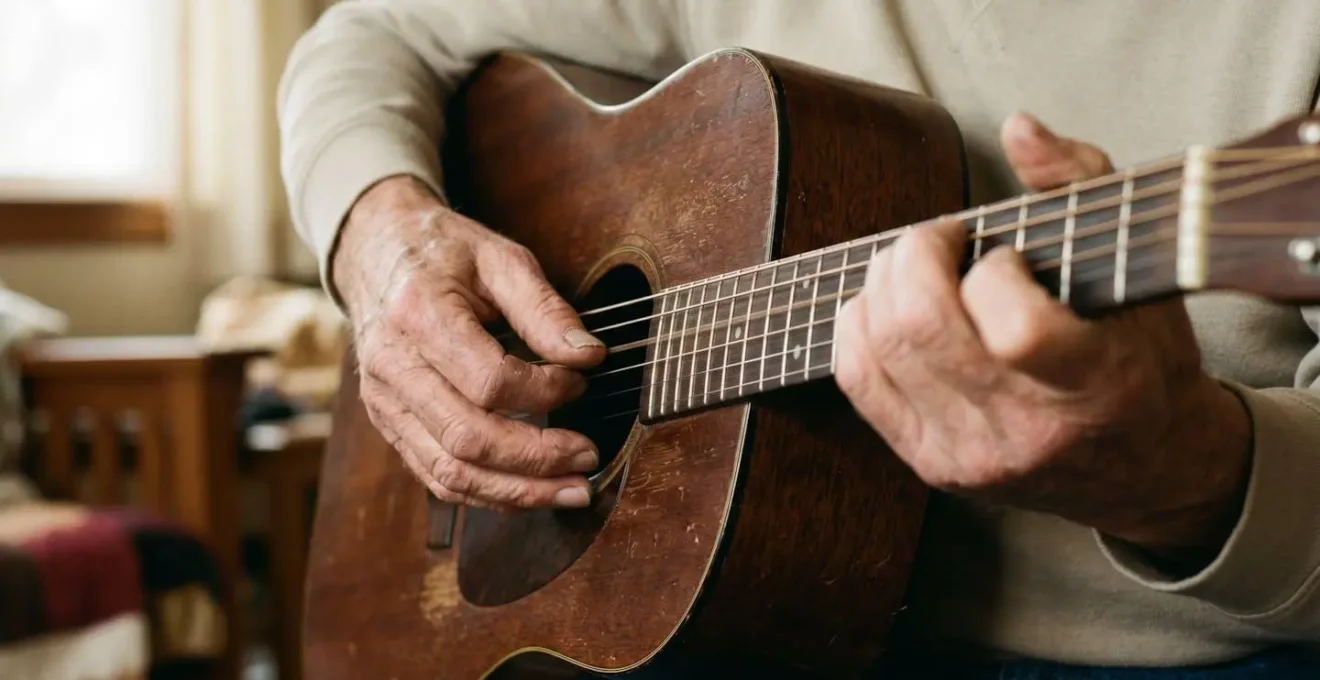
The true musical artifact is not the page, but the performance itself. As the Council on Library and Information Resources notes, sound archives contain « unique aural documentation » that captures the human element that notation cannot. This includes the subtle variations in timing, the specific instrumental techniques, and the cultural context that gives the music its meaning. This is why it’s crucial for composers to document not just their finished scores, but their process and performance practice.
This means creating contextual documentation. This could be as simple as recording a video of yourself performing a tricky passage, annotating a score with performance notes, or keeping a journal about your compositional intent. Why did you choose that harmony? What is the feeling you’re trying to evoke in that phrase? This information is priceless for future performers, musicologists, and listeners. Without it, they are left to guess, and the vital, living spirit of your music can be lost between the staves.
Key Takeaways
- Embrace Open Formats: Prioritise non-proprietary formats like MusicXML, FLAC, and PDF/A for all archival copies of your work. They are your best insurance against software obsolescence.
- Build a Resilient Archive: Implement the 3-2-1 backup rule (3 copies, 2 media types, 1 off-site) and regularly test your restores. Your archive is only as good as your ability to recover from it.
- Plan Your Legacy: Create a digital legacy packet with a full inventory of your works and designate a tech-savvy executor in your will to manage your digital assets.
The Songwriting Pride That Prevents Your Best Songs From Reaching Audiences
Many creators operate under a subtle but damaging form of pride: the belief that only « finished » work is worthy of preservation. We meticulously archive our final masters but discard the sketches, demos, and abandoned ideas that led to them. From an archivist’s perspective, this is a catastrophic error. Unfinished works are not failures; they are a vital part of the creative record, holding potential that we may not even recognise ourselves.
The posthumous career of countless artists is built upon the rediscovery of such materials. A simple demo can provide profound insight into a composer’s process or become the basis for a new, finished work by a future collaborator. The key is that these materials must survive to be discovered.
Case Study: The Beatles’ « Free as a Bird »
The creation of « Free as a Bird » in the 1990s was only possible because John Lennon had recorded a simple, unfinished piano/vocal demo in 1977. He didn’t see it as a finished piece, but he preserved the tape. Decades later, the surviving Beatles were able to take this raw material and build a complete song around it, a posthumous collaboration made possible by the preservation of an « imperfect » artifact. This powerfully illustrates that the value of a creative work is not fixed at the moment of its creation. Demos, sketches, and fragments should be archived with the same care as final masters.
The archivist’s motto is « archive everything. » You are often the worst judge of your own work’s long-term value. That fragment you dismissed might be the seed of your most important future piece, or the missing link for a musicologist studying your work a century from now. Treat every creative artifact—from a voice memo melody to a fully orchestrated score—as a candidate for the archive. Let the future decide what is valuable.
Why Do Folk Songs Change Every Time Someone Sings Them?
In the world of oral tradition, there is no such thing as a « definitive » version of a song. A folk song is a living entity, evolving with each new singer who interprets it. What might seem like a « mistake » in memory or a deliberate change in style is, in fact, the very mechanism of the tradition’s survival and growth. It’s not a failure of transmission; it is the engine of creation itself. Each performance adds a new layer, a personal inflection, a slight melodic or rhythmic shift that keeps the music relevant and alive.
The ‘mistakes’ we make when recalling a song are often our brains unconsciously personalizing it or optimizing it for our own voice or style—this isn’t a failure of transmission, but the very engine of creation.
– Cognitive science research, quoted in World Music Textbook
The act of recording, therefore, is a profound intervention. When U.S. anthropologist Jesse Walter Fewkes made the first « field recordings » of the Passamaquoddy Tribe in 1890, he did more than just capture their songs. By recording them onto wax cylinders, he froze a single moment in a constantly flowing river of tradition. Those recordings, now preserved at the Library of Congress, are invaluable historical artifacts, but they represent just one « snapshot » of a song that had existed in countless variations before and would have continued to evolve.
For a contemporary composer, this offers a powerful final perspective. While your primary goal is to preserve the integrity of your composed work, it is wise to acknowledge that once your music is performed by others, it will begin its own journey of evolution. Your meticulously documented archive serves as the « urtext »—the foundational source—but the life of your music will ultimately be found in the variations, interpretations, and, yes, even the « mistakes » of the musicians who carry it into the future.
Your music deserves to have a future. Protecting it from the silent erosion of digital decay is one of the most important responsibilities you have as a creator. Begin the process of active curation today; the work you save could be your own.