Contrary to tradition, a successful recital isn’t a display of the performer’s skill, but a masterful curation of the audience’s cognitive energy.
- Non-stop virtuosity creates ‘cognitive load,’ actively tiring listeners rather than thrilling them.
- Audience ‘absorption’ depends on narrative structure and visual connection, not just technical perfection.
Recommendation: Shift your focus from ‘demonstrating’ to ‘communicating’ by strategically managing programme flow, speech, and even your use of a music stand.
You know the feeling. You walk off stage, sweat on your brow but exhilarated, having poured every ounce of energy into a technically demanding programme. You’ve navigated the treacherous passages, shaped every phrase, and delivered the performance you spent months preparing. Yet, as you greet the audience afterwards, you notice it: a polite but weary look in their eyes. They say « bravo, » but their energy feels depleted. They seem more exhausted than you are. This is a common and deeply frustrating experience for many solo performers. We are trained to focus on our own execution, our own stamina, our own perfection.
The conventional wisdom tells us to practice more, to choose pieces we are passionate about, and to simply « connect » with the audience. But these well-meaning platitudes often miss the fundamental point. They are performer-centric, assuming that our effort and passion will automatically transfer to the listener. What if the problem isn’t the quality of your playing, but the design of the experience you are providing? What if the audience’s fatigue is a direct result of an unrelenting barrage of complexity, with no room for them to breathe, process, and feel?
This article reframes the art of the recital. It proposes that your primary role is not just as a performer, but as a Cognitive Curator for your audience. The key to an enthralling performance lies not in showcasing your endurance, but in understanding and managing the listener’s attention and energy. We will explore the science behind audience fatigue, dissect the common programming mistakes that cause it, and provide a strategic framework for designing recitals that create deep, lasting emotional impact. By shifting your perspective from demonstration to communication, you can transform a draining experience into a truly transportive one.
To guide you on this journey, this article breaks down the essential strategies for curating your audience’s experience. We will move from understanding the core problem of cognitive overload to mastering the practical tools of programming, on-stage communication, and mental preparation.
Summary: Why Your Recital Is Tiring the Audience
- Why Do Back-to-Back Virtuoso Pieces Leave Audiences Drained Instead of Thrilled?
- Why Do Audiences Lose Interest During Your Performance Even When You Play Well?
- The Recital Programming Mistake of Showing Off Instead of Communicating
- How to Talk to Audiences Between Pieces Without Breaking the Musical Spell?
- Memory or Music Stand: Which Recital Approach Serves Your Performance Best?
- Why Does Playing Piano Sonatas Feel Harder Than Playing Separate Pieces of Similar Difficulty?
- How to Maintain Focus Through a 30-Minute Sonata Performance?
- How Many Weeks Before a Recital Should Different Preparation Phases Happen?
Why Do Back-to-Back Virtuoso Pieces Leave Audiences Drained Instead of Thrilled?
The impulse to programme a series of virtuosic « showstoppers » is understandable. It’s a way to demonstrate technical mastery and give the audience a high-energy experience. However, this approach often backfires, leading to listener fatigue rather than exhilaration. The reason lies in a concept from cognitive psychology: cognitive load. Listening to complex music is not a passive activity; it’s a demanding mental task. The brain is actively processing melody, harmony, rhythm, and texture. When you present an unrelenting stream of complex information, you overload the listener’s working memory.
Imagine asking someone to solve a dozen complex maths problems in a row without a break. Even if they are a maths genius, they will become mentally exhausted. The same principle applies to music. In fact, research demonstrates that listening to multiple concurrent melodic contours causes a significant and abrupt increase in cognitive load. A programme packed with back-to-back Liszt études or Paganini caprices forces the audience into a state of sustained, high-intensity mental effort. Without moments of simplicity, silence, or familiarity to allow their minds to « reset, » their capacity to process and enjoy the music diminishes rapidly.
The antidote to this is not to abandon difficult music, but to manage the audience’s cognitive journey. Variety is key. A moment of quiet simplicity after a storm of virtuosity is not a « boring » filler; it is a crucial moment of recovery. It allows the listener to process what they’ve just heard and prepare for what’s next. As a Cognitive Curator, your job is to build a narrative arc with peaks and troughs of intensity. The thrill of a virtuosic piece is magnified when it emerges from a place of relative calm. Research confirms that while intense cognitive effort is tiring, this can be counteracted if a feeling of enjoyment is present. By pacing your programme thoughtfully, you don’t just prevent fatigue; you actively cultivate that enjoyment.
Why Do Audiences Lose Interest During Your Performance Even When You Play Well?
Sometimes, the issue isn’t just cognitive overload from a dense programme; it’s a more subtle disconnection. You might be playing with flawless technique and deep musicality, yet you can feel the audience’s attention drifting. This often happens when there’s a mismatch between what the audience *hears* and what they *see*. We tend to believe that in a classical concert, only the sound matters. This is a profound misunderstanding of the live performance experience. An audience is not just a pair of ears; they are watching you, looking for cues to guide their emotional response.
Your physical presence—your posture, your facial expressions, your gestures—is a powerful channel of communication. If you are visibly tense, inwardly focused to the point of appearing detached, or physically rigid, you create a barrier between you and the listener. They might hear beautiful sounds, but they see a performer who seems disconnected from them. This dissonance makes it difficult for them to become emotionally invested. Indeed, research on stage presence reveals that a significant link exists between the visual cues a performer provides and the audience’s overall perception of the performance quality. A performer who looks engaged, open, and emotionally present invites the audience into the music’s world.
Case Study: The Danish String Quartet and Musical Absorption
A fascinating study measured audience ‘musical absorption’ during concerts by the Danish String Quartet. Researchers found that this feeling of being ‘absorbed’ was directly tied to experiences of awe, enjoyment, and a sense of connection. Crucially, the study showed that the final section of their concerts, which featured folk tunes played with visible engagement and joy, generated the highest levels of absorption. This demonstrates that programming choices and the performer’s visible connection to the music directly influence how deeply an audience engages, independent of pure technical difficulty.
This concept of musical absorption is the ultimate goal. You want the audience to be so lost in the experience that they lose track of time. This state is achieved when auditory and visual cues are in perfect harmony. When your physical expression aligns with the emotional content of the music, you give the audience a clear and compelling narrative to follow. They don’t just hear the music’s story; they see it unfold through you. This holistic communication is what turns passive listening into active, engaged absorption, ensuring their interest never wanes.
The Recital Programming Mistake of Showing Off Instead of Communicating
Building on the ideas of cognitive load and audience absorption, we arrive at the most common strategic error in recital design: programming for demonstration instead of communication. A programme conceived as a checklist of technical skills— »here is my fast piece, my loud piece, my complex fugue »—treats the recital as an audition. It implicitly asks the audience, « Aren’t I impressive? » A far more powerful question to base a programme on is, « What journey can we take together? » This shifts the entire paradigm from a display of prowess to a shared experience.
This is the art of programme dramaturgy. Like a playwright arranging scenes in a play, the performer must arrange pieces to create a cohesive emotional and intellectual narrative. This doesn’t mean you need a literal story, but rather a structure that feels intentional and guides the listener’s attention. Think about contrast, flow, and return. How does the mood of one piece set up the next? Where are the moments of tension and release? Where does the audience need a moment of familiar comfort, and where are they ready for a challenging new sound world? This approach respects the audience’s intelligence and emotional capacity, inviting them to be active participants rather than passive spectators.
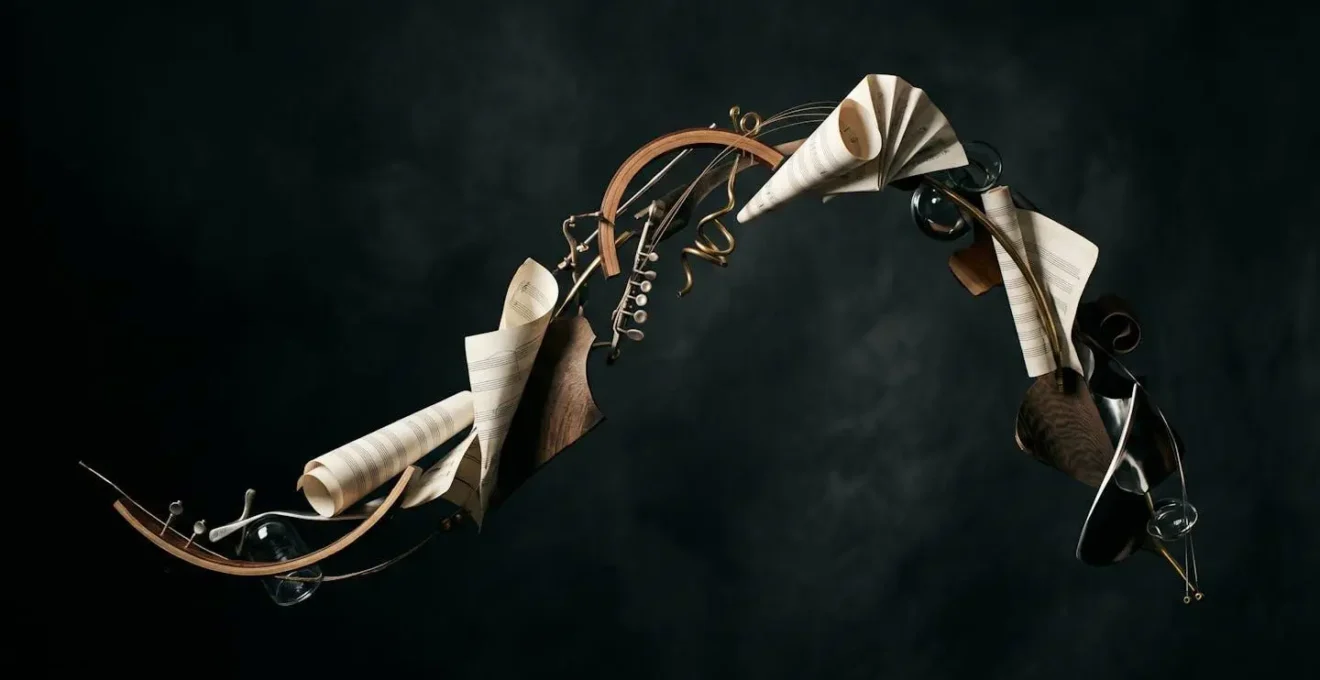
As the image above suggests, a well-designed programme has a shape, an arc. It’s not just a flat list of works. This strategic approach elevates the role of the performer from a mere technician to an artist curating an entire experience. As one expert on the subject notes, programming is about more than just picking good tunes.
Concert programming extends beyond repertoire selection; it is a multidimensional process that integrates narrative structure, audience psychology, and entrepreneurial strategy to enhance the concert experience.
– José Valentino Ruiz, Concert Programming as a Strategic Art
By embracing this multidimensional role, you stop showing off and start communicating. You build a programme that has its own internal logic and emotional resonance. The audience leaves not just impressed by your skill, but moved by the journey you’ve created for them. This is the difference between a forgettable display of fireworks and a memorable work of art.
How to Talk to Audiences Between Pieces Without Breaking the Musical Spell?
The silence between musical works is a space of immense potential—and immense risk. Used poorly, speaking can shatter the atmosphere you’ve carefully built. Used well, it can be a powerful tool for deepening connection and providing a crucial « attentional reset » for the audience. The key is to avoid turning these moments into dry, academic musicology lectures. The goal is not to « educate » the audience in a formal sense, but to invite them into your world and give them a personal access point to the music.
The most effective on-stage communication is brief, personal, and authentic. Instead of listing facts about a composer’s life, share what the piece means to *you*. Why did you choose to play it? Is there a particular image, feeling, or memory you associate with it? This personal connection is far more engaging than a list of historical dates. It transforms you from a distant, expert figure into a human being sharing a passion. This vulnerability builds a bridge of trust and makes the audience feel like they are part of a special, shared moment, not just attending a formal event.

The warmth and directness shown in the image above are what you should aim for. Speak as you would to a friend, not as if you are delivering a dissertation. A perfect example of this in action is Peter Oundjian, former first violinist of the Tokyo String Quartet. Before a performance of Beethoven’s notoriously difficult Grosse Fugue, he didn’t give a complex harmonic analysis. Instead, he told the Carnegie Hall audience that his father had introduced him to the piece when he was eight years old, sharing the personal significance it held for him. This simple, heartfelt story transformed the listening experience, creating an emotional anchor for the audience that made the complex music accessible and memorable.
Think of your words as an extension of the music, not an interruption. Use them to frame the next piece, to offer a single thought or question for the audience to hold in their minds as they listen. By being personal, concise, and genuine, you can use speech to enhance the musical spell, not break it, turning moments of transition into moments of profound connection.
Memory or Music Stand: Which Recital Approach Serves Your Performance Best?
The tradition of playing from memory in solo recitals is deeply ingrained in classical music culture. It’s often seen as the ultimate mark of professionalism and mastery. However, this tradition places an enormous cognitive burden on the performer, and it’s worth asking a crucial question: who does it really serve? The pressure to perform perfectly from memory can increase performance anxiety and create a mental state focused on avoidance of error rather than on musical communication. This internal focus can, ironically, create the very disconnection from the audience we are trying to avoid.
The fear is that using a score will appear unprofessional or that the audience will think you don’t know the piece well enough. However, the evidence suggests this fear is largely unfounded. In fact, a controlled replication study found that the presence of a music stand had only a marginal influence on how an audience evaluated a performance. They are far more interested in the quality of the musical expression and the emotional connection than in whether or not you are using a score as a safety net. For the performer, the score is not a crutch; it’s a tool that can liberate mental resources. By offloading the burden of total recall, you free up cognitive capacity to focus on phrasing, tone, and, most importantly, engaging with the audience.
It’s also important to understand that musical memory is not a single, monolithic thing. Research with a solo cellist who memorized a Bach suite revealed a fascinating split: her ability to play the piece from memory was near-perfect, while her ability to write it out was significantly less accurate. This shows that motor memory—the « knowledge in the hands »—is distinct from conscious, declarative recall. The music is already deeply ingrained in your physical being. The score simply acts as a prompter, reducing the anxiety of a potential memory slip and allowing that deeply embedded motor memory to flow more freely and expressively.
The decision is ultimately a personal one, but it should be a strategic choice, not one based on dogma. If playing from memory allows you to feel freer and more connected, then that is the right path. But if the pressure of memorization is causing anxiety and pulling your focus inward, then using a score is the more intelligent, audience-centred choice. It is a tool that allows you to be a more present and communicative performer, which is what truly serves the performance best.
Why Does Playing Piano Sonatas Feel Harder Than Playing Separate Pieces of Similar Difficulty?
Many performers notice that playing a 30-minute sonata feels exponentially more demanding than playing 30 minutes of separate études or character pieces, even if the technical difficulty of the individual passages is comparable. This isn’t just a feeling; it’s a reflection of a fundamentally different type of performance challenge. The difference lies in the demand for sustained cognitive and emotional focus. A collection of short pieces is like a series of sprints: you can give a burst of intense energy and then « reset » your focus between each one. A sonata, however, is a marathon.
A multi-movement work like a sonata is a single, large-scale architectural structure. It has its own internal narrative, with thematic development, recurring motifs, and emotional arcs that span across movements. To perform it effectively, you can’t just play each movement as a separate entity. You must hold the entire structure in your mind, maintaining an unbroken thread of thought and intention from the first note to the last. This requires an immense level of sustained concentration that is far more taxing on working memory and executive function than the « sprint and reset » focus required for a miscellaneous programme.
This sustained effort affects not only the performer but also the audience. You are asking them to follow you on this long-form journey. If your own focus wavers, if the architectural thread breaks, they will feel it immediately and their own attention will fragment. The mental stamina required to maintain the narrative integrity of a large-scale work is a specific skill. It involves managing your energy, navigating transitions between contrasting sections and movements without losing the overarching line, and maintaining emotional intensity over a long duration. This is why a sonata feels harder: it tests not just your fingers, but the depth and resilience of your musical thinking across a vast canvas.
Key Takeaways
- Audience fatigue is often caused by ‘cognitive load’ from non-stop musical complexity, not boredom.
- Effective recital programming acts as ‘narrative dramaturgy,’ guiding the listener’s energy with strategic contrast and flow.
- Stage presence and visual cues are as crucial as sound; your physical engagement directly impacts audience absorption.
How to Maintain Focus Through a 30-Minute Sonata Performance?
Given the marathon-like demands of a sonata, maintaining unwavering focus for its entire duration is one of the greatest challenges a performer faces. A momentary lapse can break the structural integrity and disrupt the audience’s journey. The secret to sustained focus is not simply « trying harder » or brute-force concentration. It lies in managing your internal state and your perception of the performance environment. The practice room is a controlled, safe space; the stage is not. The presence of an audience changes everything.
The key is to transform your perception of the audience from that of a panel of judges to that of receptive partners in a shared experience. If you view them as a threat, your body will enter a state of fight-or-flight, flooding with adrenaline, increasing tension, and making focus nearly impossible. If you view them as allies, eager to go on the musical journey with you, your physiological state will be calmer and more open, allowing for a deeper and more stable focus. It’s a mental shift from a mindset of « I hope I don’t make a mistake » to one of « What do I want to share with these people? »
To achieve this, performers can use specific mental techniques. As recent research on music performance anxiety shows that musicians use mental visualization and cognitive strategies to manage their state. Before the performance, visualize not just the notes, but the entire experience going well: you feel calm, the audience is warm and receptive, and you are communicating freely. During the performance, especially in the brief pauses between movements, use « inter-movement reset rituals. » This could be a specific deep breath, a physical gesture, or a mental cue word (« focus, » « share ») that brings your attention back to the present moment and reinforces your communicative intent. These small rituals act as anchors, preventing your mind from drifting into anxiety or distraction and allowing you to maintain that crucial, unbroken thread of concentration.
How Many Weeks Before a Recital Should Different Preparation Phases Happen?
Transforming your recital approach from a technical demonstration to a curated experience requires a more structured and holistic preparation process. It’s not just about learning the notes; it’s about building the performance from the ground up, with the audience’s experience in mind at every stage. A phased approach, starting many weeks or even months out, allows you to integrate these new skills of communication and programme dramaturgy into your work, rather than trying to tack them on at the last minute. This preparation can be broken down into distinct, sequential phases.
The initial phase, long before the concert, is educational and strategic. This is where you move beyond your instrument and study the art of programming itself. You define the narrative of your recital and make your repertoire choices based on the journey you want to create. The next phase is the technical and interpretive workshop, where you do the deep work on the music itself, but with a new lens. You’re not just practicing for accuracy; you’re exploring the emotional character of each piece and how it fits into the larger programme.
As the recital approaches, you enter the implementation and simulation phase. This is where you move from the practice room to a simulated stage. You perform full run-throughs of the programme, including the spoken introductions, and even practice your bowing. You might record yourself to analyse your physical presence and communication. This is followed by a monitoring and refinement phase, where you identify weak spots—not just technical slips, but moments where the narrative sags or the communication feels unclear—and address them with targeted practice. The final phase is one of mental preparation and rest, ensuring you arrive on stage not just technically prepared, but mentally and emotionally ready to connect and communicate.
Your Strategic Recital Preparation Roadmap
- Educational Session: Weeks 12-16. Introduce and absorb evidence-informed principles for quality practice and performance preparation, focusing on audience psychology and programme dramaturgy.
- Workshop & Integration: Weeks 8-12. Conduct structured personal workshops on deliberate practice, focus of attention, and using imagery. Begin integrating spoken introductions and transitions.
- Implementation & Simulation: Weeks 4-8. Apply scenario planning for the recital. Conduct full, uninterrupted run-throughs in the performance space if possible, simulating real concert conditions.
- Monitoring & Refinement: Weeks 2-4. Track practice strategies and goal-directed activities using logs. Record run-throughs to evaluate physical stage presence and pacing, making targeted adjustments.
- Reflection & Rest: The final week. Taper intensive practice. Use semi-structured reflection to solidify interpretive choices and mental cues. Focus on rest and mental visualization for a calm, confident performance state.
By reframing your role from a demonstrator of skill to a curator of experience, you can fundamentally change the dynamic of your recitals. Start today by analysing your next programme not for its difficulty, but for its narrative arc and its impact on the listener’s energy.