
An artist’s longevity isn’t accidental; it’s forged by their ability to achieve deep and lasting ‘Cultural Resonance’, embedding themselves into the fabric of the nation’s memory.
- Capturing the zeitgeist at a pivotal moment is more powerful than just releasing good music.
- Sustained relevance requires a conscious strategy of reinvention and legacy curation, not just past glory.
- Fading often begins when an artist loses their authentic connection to the cultural role they once defined.
Recommendation: When you next listen to a classic artist, listen for the cultural story they tell—it’s the true source of their immortal echo.
You’re driving, and a song comes on the radio. It’s Queen, or Kate Bush, or David Bowie. The track is forty, maybe fifty years old, yet it feels as vital and present as anything in the current Top 40. You know every word. It’s part of the UK’s sonic wallpaper. But then a thought strikes: what happened to their contemporaries? For every Madonna who endured, dozens of 80s icons have become footnotes, their music confined to specialist retro shows. Why does one artist achieve immortality while another, equally talented, fades into obscurity?
The common answers feel incomplete. « They just wrote better songs » is subjective; « they had great marketing » is too simplistic. Even the idea of « reinvention » only tells part of the story. The real mechanism is deeper and more complex. It’s about an artist’s power to create and sustain Cultural Resonance. This isn’t just about being popular; it’s about becoming a symbol, a soundtrack to a specific moment in our collective lives, and then skillfully curating that legacy so it continues to speak to new generations. An artist doesn’t just have a career; they anchor themselves to the timeline of British culture.
This article decodes the mechanics of musical immortality. We’ll explore how artists like David Bowie and Madonna became masters of the zeitgeist, analyse the strategic choice between studio craft and live spectacle, and identify the warning signs that an artist’s cultural connection is beginning to fray. By looking at examples from pop history and even classical music, we will build a framework for understanding why some echoes never fade.
To navigate this exploration of musical legacy, the following guide breaks down the key factors that separate the timeless icons from the temporary stars. Each section dissects a crucial piece of the puzzle, from initial breakthrough to long-term legacy management.
Contents: The Enduring Power of British Music Legends
- Why Did British Audiences Embrace David Bowie in 1972 but Ignore Him in 1969?
- How Did Madonna Stay Relevant for 40 Years While Her 80s Peers Disappeared?
- Studio Genius or Live Legend: Which Path Creates More Enduring Fame?
- The 3 Career Moves That Signal an Iconic Artist Is About to Fade
- When Should a Legacy Artist Release a Box Set Without Looking Desperate?
- Why Was Vivaldi Forgotten for 200 Years Before Becoming a « Genius » Again?
- Prodigy or Late Bloomer: Which Path Produces More Lasting Work?
- Why Do Some Symphonies Become Immortal While Equally Good Ones Are Forgotten?
Why Did British Audiences Embrace David Bowie in 1972 but Ignore Him in 1969?
The story of David Bowie’s rise is not one of steady ascent, but of a false start and a perfectly timed cultural explosion. In 1969, his song ‘Space Oddity’ was a UK top-five hit, yet his subsequent work failed to connect. He was a one-hit-wonder. By 1972, everything had changed. The difference wasn’t just the music; it was the creation of a Zeitgeist Anchor. The Bowie of 1969 was a folk-influenced singer; the Bowie of 1972 was the alien messiah Ziggy Stardust, a character that perfectly encapsulated the androgyny, glamour, and futuristic anxieties of the era.
The pivotal moment was his performance of ‘Starman’ on *Top of the Pops*. As documented in historical accounts of the Ziggy Stardust era, that single television appearance was a cultural catalyst. When Bowie, draped in a multicoloured jumpsuit, slung his arm around guitarist Mick Ronson, he wasn’t just performing a song; he was signalling a seismic shift in attitudes towards gender and identity, broadcast directly into the living rooms of Britain. This was Cultural Resonance in its purest form. The music was the vehicle, but the character and the moment were the fuel that launched him into superstardom.
Bowie himself was acutely aware of this dynamic. In a Melody Maker interview from January 1972, before the madness truly began, he showed a chilling foresight into the nature of fame built on such intense cultural moments. As he prophetically stated:
I’m going to be huge, and it’s quite frightening in a way, because I know that when I reach my peak and it’s time for me to be brought down it will be with a bump.
– David Bowie, Melody Maker interview, January 1972
His earlier failure highlights a crucial lesson: talent and quality songs are necessary but not sufficient. Without a connection to the wider cultural mood, an artist remains unheard. Bowie’s 1972 success was a masterclass in creating a persona so magnetic and timely that it defined its era, ensuring his legacy long after the glitter had settled.
How Did Madonna Stay Relevant for 40 Years While Her 80s Peers Disappeared?
If Bowie’s breakthrough was a single, powerful explosion of cultural resonance, Madonna’s is a story of controlled, continuous detonations over four decades. While many of her 80s contemporaries defined themselves with one powerful look or sound and then faded, Madonna institutionalised the very act of change. Her longevity is not based on nostalgia for a single era, but on her relentless pursuit of the next cultural shift, often shaping it herself. She understood that relevance is a moving target and that to stay in the conversation, you must constantly give people something new to talk about.
This is more than just changing outfits; it is a sophisticated brand strategy built on strategic evolution. Each album cycle—from ‘Like a Virgin’s provocative pop to ‘Ray of Light’s spiritual electronica to ‘Madame X’s global-political theatre—was a complete aesthetic and thematic reset. This process of constant reinvention ensured she was always slightly ahead of the curve, tapping into new subcultures and ideas before they hit the mainstream. The visual below represents this constant layering of identity, where new forms overlay the old without erasing them, creating a complex and evolving whole.

This strategy has built formidable brand equity. A research study on her 2024 Celebration Tour, published on ResearchGate, examined her four-decade influence and found that for 67% of her audience, brand image was a key factor in their support. When asked to describe her, the top responses weren’t about a specific song, but about her core identity: 18% called her « strong and established, » while 16% saw her as a « symbol of empowering others and reinvention. » This demonstrates that her core product isn’t just music; it’s the very concept of personal evolution, a theme with timeless cultural resonance.
Studio Genius or Live Legend: Which Path Creates More Enduring Fame?
The path to musical immortality has traditionally forked: are you the meticulous studio craftsman, like Brian Wilson, or the electrifying live performer, like James Brown? In the modern era, the most enduring legacies, like that of Queen, masterfully combine both. The live performance creates the initial cultural memory and emotional connection, while the studio recordings create the durable, infinitely reproducible asset that ensures longevity. Queen is the ultimate example: Freddie Mercury’s unparalleled stage presence created legendary moments like their 1985 Live Aid performance, an event seared into the UK’s collective consciousness.
However, it is the band’s studio genius—their intricate harmonies, genre-bending arrangements, and perfectly crafted songs—that has become a monumental financial asset. This is where enduring fame translates into tangible, generational value. In 2024, Sony Music acquired Queen’s catalog for a staggering $1.27 billion, the largest such deal in history. This valuation isn’t just for ‘Bohemian Rhapsody’; it’s for the entire body of work, a testament to its timeless appeal and consistent earning power in the streaming age. The live legend creates the myth, but the studio genius creates the scripture that is passed down.
This trend of skyrocketing catalog values underscores the financial engine of modern legacy. It’s not a recent phenomenon but an accelerating one. Research from NYU’s Steinhardt School revealed that the average multiple for catalog valuations grew from 8.6x to 20.7x between 2011 and 2021. This demonstrates a clear industry shift: recorded music is no longer just a product but a blue-chip asset class. For an artist, this means that while live shows build a fanbase, it’s the quality and depth of the recorded catalog that will ultimately fund their immortality, ensuring their music is managed, marketed, and discovered by new audiences long after they’ve left the stage.
The 3 Career Moves That Signal an Iconic Artist Is About to Fade
Just as there are signs of an artist achieving cultural resonance, there are clear indicators of Resonance Decay—the moment an artist loses their connection to the zeitgeist and begins to fade from the central cultural conversation. This is rarely a sudden event, but a gradual process marked by a few predictable career moves. Recognizing them is key to understanding why some legacies wane. The three most common signals are a retreat into pure nostalgia, a loss of aesthetic conviction, and creative stagnation.
First is the over-reliance on the « Greatest Hits » tour without any new, compelling artistic statement. When an artist’s present becomes solely about curating their past, they transition from being a creator to a museum curator. Second is a visible loss of conviction in their own image or sound. The audience can sense when an artist is just going through the motions or, worse, chasing trends they no longer authentically embody. David Bowie’s decision to retire Ziggy Stardust at the peak of his fame in 1973 was a masterstroke of avoiding this trap. He understood that the character’s resonance was finite and famously said, « If I’m tired with what I’m doing wouldn’t it be long before the audience realised. »
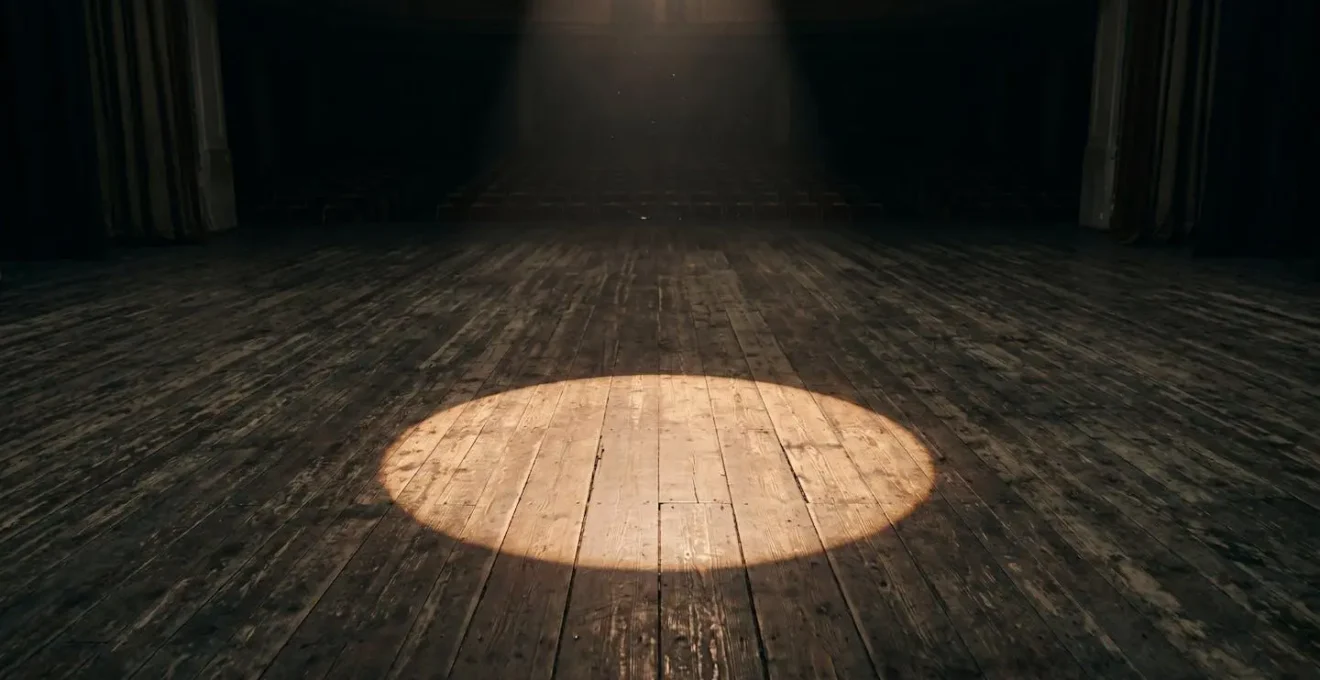
The final, and most critical, sign is a failure to evolve thematically. An artist who continues to write about teenage rebellion in their fifties or who fails to update their lyrical concerns as their audience grows older creates a disconnect. Their work no longer reflects the lives of their fans or the wider world. This is the essence of Resonance Decay: the artist and the culture are no longer in sync. The stage is still there, but the vital energy that once filled it has dissipated, leaving only an echo.
Action Plan: Auditing an Artist’s Career for ‘Resonance Decay’
- New vs. Old Ratio: Analyse their last five years of activity. What is the ratio of new material (albums, singles) versus retrospective projects (greatest hits tours, re-issues)? A heavy skew towards the past is a red flag.
- Audience Connection: Examine their recent interviews and public statements. Do they speak passionately about their current work and ideas, or do they primarily reminisce about their « glory days »?
- Aesthetic Coherence: Look at their visual presentation (artwork, music videos, stage design) over the last two album cycles. Is there a clear, evolving artistic vision, or does it feel inconsistent and trend-chasing?
- Critical Reception: Compare reviews of their recent work to their classic albums. Are critics noting a lack of innovation or a re-treading of old ground? Note the shift from « visionary » to « reliable. »
- Cultural Footprint: Search for their name in recent cultural conversations outside of music press (e.g., film soundtracks, social media trends, political commentary). A diminishing presence signals a fading broader relevance.
When Should a Legacy Artist Release a Box Set Without Looking Desperate?
In the world of legacy artists, the box set is a double-edged sword. Released strategically, it’s a masterful act of Legacy Curation that deepens an artist’s mythology and re-engages their fanbase. Timed poorly or executed without vision, it can look like a desperate cash-grab, a sign that an artist has nothing new to say. The key difference lies in one word: narrative. A successful box set doesn’t just compile hits; it tells a new story or reveals a hidden chapter of the artist’s creative process.
David Bowie’s estate are masters of this. The 2024 release of *Rock ‘n’ Roll Star!*, a five-disc set chronicling the genesis of Ziggy Stardust, is a perfect case study. It wasn’t just a re-issue. It contained unreleased demos, outtakes, and radio sessions that fundamentally enriched the lore of his most iconic creation. This approach treats the archive not as a vault to be emptied, but as a library to be explored, offering fans a deeper understanding of the work they love. It adds value to the narrative, justifying its existence and premium price point. Crucially, it followed the album’s 2017 preservation in the US National Recording Registry, using external validation to reinforce its cultural importance.
The timing of such releases is critical in the modern music economy. The rise of streaming has fundamentally changed how we consume music, with older tracks more accessible than ever. Analysis shows that in 2021, catalog music (releases older than 18 months) made up 70% of album consumption in the US, up from 65% the year before. This creates a huge, engaged audience for back-catalog material. The right time for a box set is when it can tap into this demand not by merely repackaging, but by curating. It should arrive to celebrate a significant anniversary, mark a cultural reappraisal of the work, or, ideally, offer genuine, unheard material that illuminates the genius behind the original art.
Why Was Vivaldi Forgotten for 200 Years Before Becoming a « Genius » Again?
The concept of cultural resonance is not unique to pop music; it powerfully explains the fluctuating reputations of classical composers. Antonio Vivaldi, composer of the ubiquitous *The Four Seasons*, is a prime example. While hugely famous in his lifetime, he died in poverty and his music was almost completely forgotten for nearly two centuries. His fall and subsequent resurrection demonstrate that even transcendent genius is subject to the whims of the cultural zeitgeist. Vivaldi’s decline was a classic case of Resonance Decay on a historical scale.
His music, the epitome of the intricate and ornamental Baroque style, simply fell out of fashion. The cultural mood shifted towards the cleaner, more structured elegance of the Classical period of Mozart and Haydn, followed by the grand emotional drama of the Romantic era of Beethoven and Wagner. Vivaldi’s work, once seen as vibrant and innovative, was dismissed as fussy and old-fashioned. His name vanished from concert programs and musical lexicons. He wasn’t a « bad » composer; the cultural frequency he broadcast on was no longer being received.
His « rediscovery » in the early 20th century was an act of scholarly Legacy Curation. Figures like the Italian composer Alfredo Casella championed his work, organising Vivaldi weeks and publishing modern editions of his scores. This academic revival coincided with a new cultural moment: the advent of recording technology and a post-Romantic appreciation for the clarity, energy, and virtuosity of Baroque music. Vivaldi’s work suddenly resonated again. *The Four Seasons* became a staple of the new LP record format due to its vibrant sound and digestible structure. Vivaldi’s story is a powerful reminder that « immortality » is not a permanent state; it is a legacy that must be occasionally rediscovered and re-contextualized to find its resonance with a new age.
Prodigy or Late Bloomer: Which Path Produces More Lasting Work?
The music world loves its archetypes: the prodigious youth who explodes onto the scene, and the seasoned late bloomer who achieves success after years of quiet work. When it comes to creating a lasting legacy, which path is more effective? While prodigies often capture a powerful, immediate cultural moment, their fame can be a fragile trap. The late bloomer, conversely, often builds a more durable foundation for long-term cultural resonance. A prodigy’s work is tied to a specific time—their youth—while a late bloomer’s work is often built on more timeless, universal human experience.
The challenge for the prodigy is immense. They become a Zeitgeist Anchor for a very specific youth culture moment. As they age, they face a difficult choice: either they try to recapture that youthful energy, which can appear inauthentic, or they evolve and risk alienating the fanbase that loved them for who they were. Many burn out, unable to navigate the transition from a symbol of youth to a mature artist. Their initial, intense resonance becomes a creative straitjacket.
Late bloomers, like Leonard Cohen or Bill Withers, often have more lasting power because their breakthrough comes after years of life experience. Their work is not defined by the fleeting passions of youth but by deeper reflections on love, loss, and society. This maturity gives their music a broader, more enduring appeal that can resonate across generations. They skip the volatile peak-and-trough cycle of the prodigy. As Ed Robertson of Barenaked Ladies noted in an interview, the downward slope of fame can be as instructive as the rise: « The best part of the roller-coaster is the ride back down. » Late bloomers start their public journey on a more stable creative footing, having already navigated their personal ups and downs in private. Their resonance is less explosive, but often far more sustainable.
Key Takeaways
- Cultural Resonance is the single most important factor for artistic longevity, more so than subjective « quality » or marketing spend.
- Enduring fame requires an active strategy, whether through constant reinvention like Madonna or careful legacy curation like Bowie’s estate.
- Fading is not a failure of talent but a loss of connection; when an artist ceases to reflect or shape the cultural conversation, their echo begins to dim.
Why Do Some Symphonies Become Immortal While Equally Good Ones Are Forgotten?
The ultimate test of the Cultural Resonance theory lies in the world of classical music, which is often perceived to be a pure meritocracy of genius. Yet for every Beethoven’s 5th Symphony that has achieved global immortality, there are dozens of equally brilliant symphonies from the same era by composers like Carl Czerny or Louis Spohr that are known only to specialists. The difference is not necessarily quality; it is a process of institutional Canon Formation. A work becomes « immortal » because it is actively kept alive in the cultural conversation.
A symphony becomes part of the canon through repetition and exposure. It is programmed by major orchestras, taught in music schools, analysed by scholars, and—crucially in the modern era—used in films, television, and advertising. This creates a feedback loop: the more it is heard, the more familiar and « important » it seems, and the more likely it is to be programmed again. It becomes a shared cultural touchstone, a piece of music that « everyone » knows, cementing its place in the collective consciousness. It achieves a level of fame so pervasive it appears to be an objective fact of its own greatness.
This principle of sustained presence is mirrored in the pop world. An analysis of Billboard’s historical charts found that Elton John holds the record for the longest chart presence, with hits spanning approximately 50 years. This incredible longevity is not just because he writes great songs, but because he has consistently remained in the public eye, collaborating, touring, and releasing new music. Like Beethoven’s 5th, his work has been in constant rotation, creating a sense of permanence. Immortality, whether for a symphony or a pop star, is not a status that is achieved once; it is a status that is perpetually maintained.
Ultimately, the artists who endure are those who master the art of resonance. They create a powerful connection with their time and then find ways to make that connection echo through the decades. The next time you hear a classic track, listen deeper. Don’t just hear the melody; listen for the story it tells about its moment, and you will understand the secret to its immortal life.